
The Macedonian Who Learned to Fight Like a Theban
In 368 BCE, a teenage Philip of Macedon arrived in Thebes not as a student or ambassador, but as a hostage. His brother, the Macedonian king, had been forced to surrender the boy as surety for a peace treaty—a common practice that turned children of ruling families into living insurance policies.
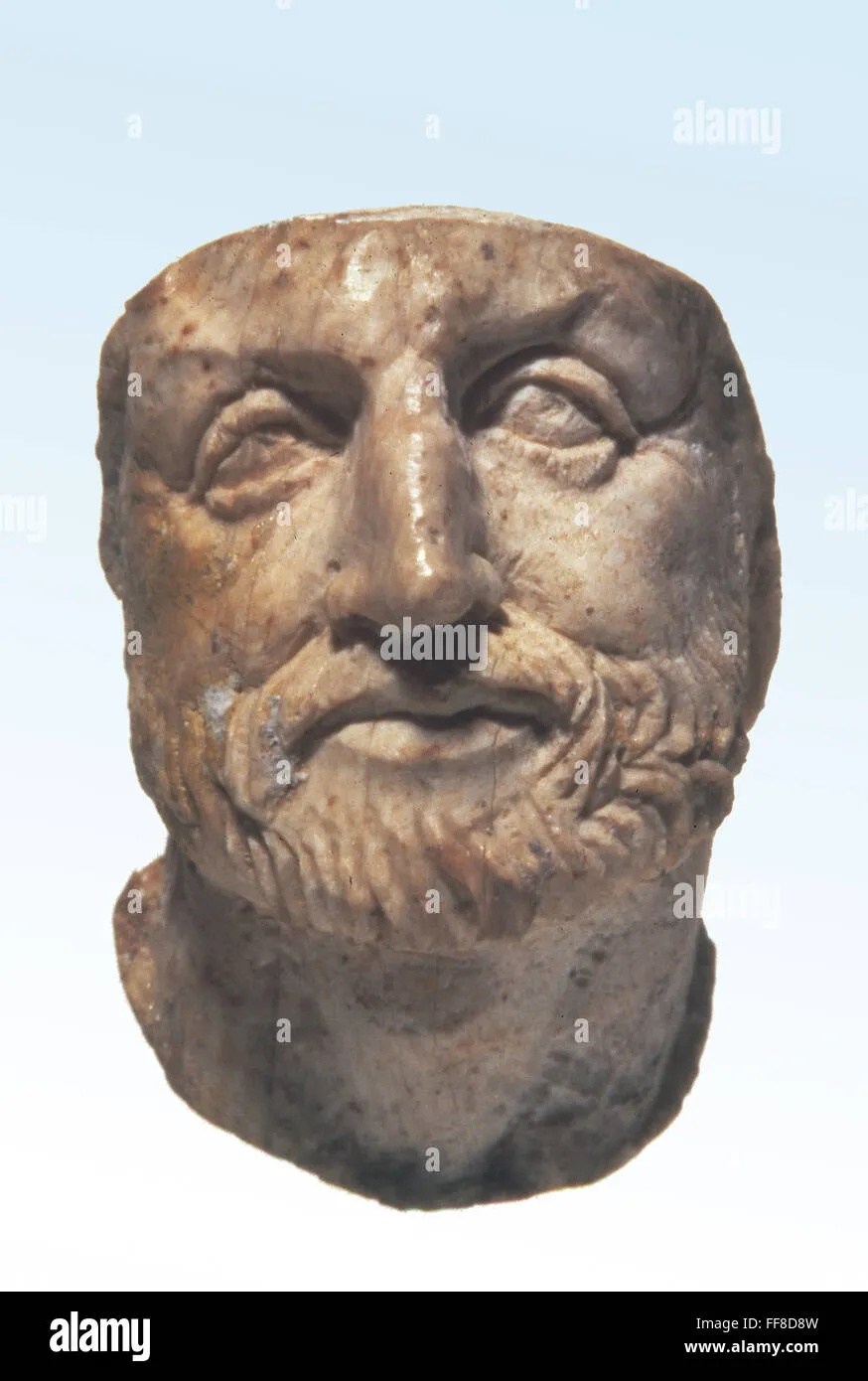 Photo: Philip of Macedon, via c8.alamy.com
The Thebans expected Philip to spend three years in comfortable captivity, learning Greek culture while ensuring his kingdom's good behavior. Instead, they accidentally created the military genius who would conquer Greece.
Philip didn't just observe Theban military innovations—he understood them from the inside. He watched Epaminondas drill the Sacred Band, studied the oblique formation that had shattered Spartan supremacy, and absorbed tactical concepts that Macedonian commanders had never imagined. When he returned home, he didn't simply copy what he'd learned; he evolved it. The Macedonian phalanx that would dominate battlefields from Egypt to India was born in a Theban training ground, refined by a hostage who had been forced to see warfare through his captors' eyes.
 Photo: Epaminondas, via i.ytimg.com
This pattern—enforced exile producing unexpected innovation—appears so frequently throughout history that it suggests something fundamental about human learning and adaptation.
The Unintended Academy
The ancient world ran on hostage exchanges. Royal children, noble heirs, and promising young leaders were routinely sent to foreign courts as guarantees of treaties, trade agreements, and political alliances. The practice was meant to create mutual vulnerability—if you break the deal, we kill your son.
Instead, it created history's most effective leadership development program.
Consider Demetrius I of Bactria, who spent his youth as a hostage in the Seleucid court before returning to build one of the most successful Hellenistic kingdoms. Or Jugurtha of Numidia, whose time in Rome as a "guest" taught him exactly how Roman politics worked—knowledge he later used to nearly defeat the Republic in a devastating war.
These weren't isolated cases. Archaeological and literary evidence suggests that a significant percentage of ancient rulers had spent time as hostages in foreign courts during their formative years. The practice was so common that being a returned hostage became almost a credential for effective leadership.
The Psychological Advantage of Forced Perspective
Why did hostage experiences produce such effective leaders? Modern psychology offers several explanations, all rooted in cognitive patterns that haven't changed since Philip learned Theban tactics.
First, enforced immersion eliminates the luxury of dismissing foreign ideas as inherently inferior. When you're dependent on your captors for survival, you pay attention to how they think and why their systems work. Hostages couldn't afford the intellectual arrogance that often blinded visiting diplomats or military observers.
Second, the experience created leaders who understood both sides of cultural and military conflicts. Philip didn't just know how to fight against Greek hoplites—he understood why Greeks fought the way they did, what they valued, and how they made tactical decisions. This dual perspective proved invaluable when he began conquering Greek city-states that couldn't understand how he anticipated their every move.
Third, hostage experiences forced adaptability under pressure. These young leaders had to navigate foreign courts, learn new languages, and survive in environments where a single mistake could mean death. The psychological resilience this developed served them well when they returned to face the normal challenges of governance and warfare.
The American Exception
American history offers few direct parallels to ancient hostage-taking, but the underlying principle—that enforced exposure to different systems creates more effective leaders—appears in other forms.
Consider the generation of American military officers who served as military advisors in Vietnam before the war escalated. Those who spent years embedded with South Vietnamese forces, learning their tactics and understanding their perspective, generally performed better as commanders when the U.S. committed ground troops. They had been forced to see the conflict through Vietnamese eyes in ways that later arrivals never could.
Similarly, American business executives who spent early careers in foreign subsidiaries—not by choice but by corporate assignment—often proved more effective at international expansion than those who remained stateside. The enforced adaptation to different business cultures created leaders who could navigate complexity that seemed impossibly foreign to their domestically-trained colleagues.
The Digital Age Hostage Exchange
Today's equivalent might be found in the technology sector, where engineers and executives routinely spend years at companies they don't particularly want to join—bound by non-compete agreements, visa requirements, or acquisition deals. Like ancient hostages, they're forced to understand systems they might otherwise dismiss.
The most successful tech leaders often have résumés that read like strategic hostage exchanges: the Apple executive who spent formative years at Microsoft, the Google founder who learned from early internet failures, the startup CEO who survived the collapse of a previous company. They succeeded not despite these experiences but because of them.
Learning from Adversaries vs. Learning About Them
The key distinction is between learning from adversaries and merely learning about them. Military academies teach students about enemy tactics. Diplomatic schools provide cultural briefings on foreign nations. Business schools offer case studies on competitor strategies.
But none of these approaches replicate the psychological pressure of actual dependence on people whose systems you might otherwise reject. Philip didn't study Theban military theory in a classroom—he lived it, depended on it, and absorbed it at a level that academic observation could never achieve.
This suggests that our current approach to understanding competitors, whether in business, politics, or international relations, might be fundamentally limited. We study our adversaries from the outside, analyzing their decisions and predicting their behavior, but we rarely force ourselves to understand how the world looks from their perspective.
The Hostage Advantage in Modern Context
The most successful contemporary leaders often share a crucial trait with history's returned hostages: they've been forced to succeed within systems they didn't create and might not naturally prefer. The immigrant entrepreneur who had to master American business culture. The military officer who spent years in joint commands with foreign allies. The politician who began their career in the opposing party.
These experiences create leaders who can navigate complexity because they've been forced to see it from multiple angles. Like Philip returning from Thebes with tactical innovations his enemies couldn't anticipate, they bring perspectives that pure insiders never develop.
The lesson for modern leadership development is clear: voluntary exposure to different systems, no matter how intensive, can't replicate the psychological pressure of actual dependence. The most effective learning happens when you have no choice but to make foreign systems work for you—when failure to adapt means genuine failure, not just academic disappointment.
History's hostages succeeded because they couldn't afford to fail at understanding their captors. That kind of pressure, uncomfortable as it was, created leaders who changed the world.