Every Empire Has Called Itself the World's Liberator. Here Is What That Actually Means.
Every Empire Has Called Itself the World's Liberator. Here Is What That Actually Means.
Let us begin with a proposition that is historically verifiable and psychologically revealing: no empire in recorded history has ever described itself as an empire. The word, when applied, always comes from outside or from the future. From the inside, looking out, the view is invariably different. From the inside, the project is always liberation.
This is not hypocrisy, exactly. Or rather, it is not only hypocrisy. It is something more interesting — a consistent feature of human cognition that appears whenever a society accumulates enough power to project it onto others. The language of freedom is not a democratic invention. It is the oldest available justification for dominance, and its persistence across five thousand years of history tells us something important about how the human mind negotiates the gap between what it wants and what it is willing to admit it wants.
Athens: The Democracy That Ran on Slavery
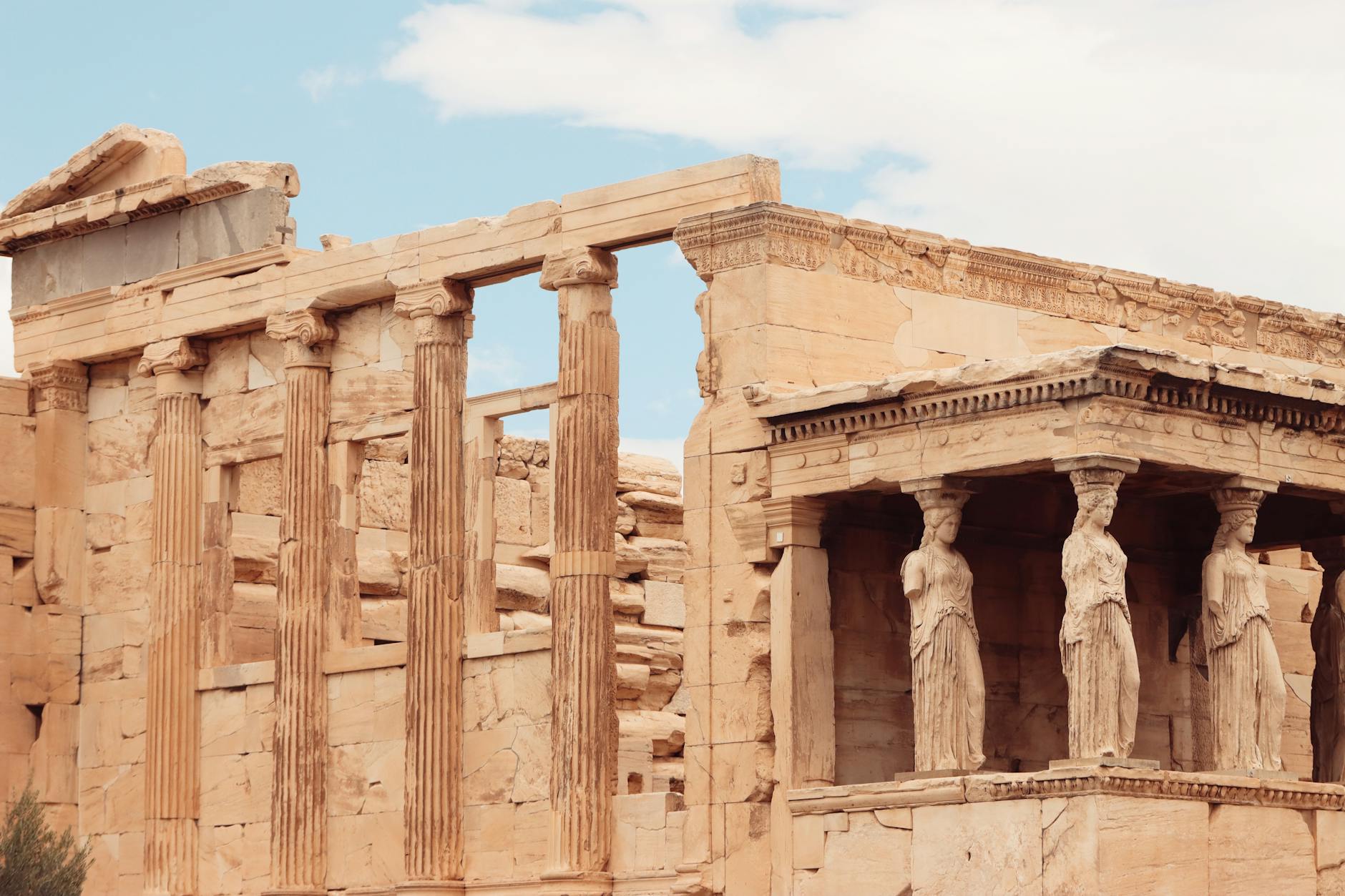
The Athenian democracy of the fifth century BCE is, in many Western educational traditions, the founding story of freedom. And in a meaningful sense, it was genuinely revolutionary. The Athenian assembly extended political participation to a broader class of people than most contemporary societies could imagine. The debates were real. The votes counted.
Athens also held somewhere between 80,000 and 100,000 enslaved people at the height of its democratic period — roughly one-third of its total population. The leisure that allowed Athenian citizens to participate in democratic life, to attend the assembly, to engage in philosophical discourse, was purchased by the forced labor of human beings who had no standing in that democracy whatsoever.
The Athenians were not unaware of this tension. They simply resolved it through a categorical distinction: the freedom they were defending was the freedom of citizens, a status that was itself a form of property. The enslaved were not citizens. Therefore their condition raised no contradiction.
More revealingly, Athens justified its imperial ambitions — the Delian League, the extraction of tribute from allied city-states, the brutal suppression of revolts — using the language of collective Greek freedom against Persian despotism. The Athenians were defending civilization. They were protecting the free world. The fact that this defense required them to dominate the very city-states they claimed to protect was, in the Athenian political imagination, a regrettable administrative necessity.
The logic is not obscure. It is, in fact, completely legible to any attentive reader of subsequent history.
Rome: The Freedom to Be Roman
Roman expansion carried its own freedom narrative. The Romans did not typically describe conquest as conquest. They described it as the extension of law, order, and civilization to peoples who had previously suffered under the chaos of barbarism. To become Roman was, in the Roman self-conception, to be elevated — to be brought within the protection of a legal and social system that represented humanity's highest achievement.
This was not entirely empty. Roman law was sophisticated. Roman infrastructure was genuinely transformative. Many conquered peoples did, over generations, come to identify as Roman and to value what that identity offered.
But the terms of the offer were not negotiable, and the process of extending civilization involved considerable violence. The Gauls did not vote to become Roman. The Carthaginians were not consulted about whether they found Roman civilization preferable to their own. The freedom Rome offered was, in practice, the freedom to participate in a system on Rome's terms or to be destroyed.
The sincerity of the Romans who believed in their civilizing mission does not make the mission less imperial. It makes it more human.
The British Empire's Civilizing Brief
The British Empire produced some of the most elaborate freedom rhetoric in history, and it did so with a sophistication that reflected genuine philosophical effort. Edmund Burke agonized over the ethics of empire. John Stuart Mill argued that liberty was the highest human good while simultaneously contending that colonial peoples were not yet ready for it. The tension was visible, acknowledged, and resolved — consistently — in favor of continued British control.
The civilizing mission held that Britain's presence in India, Africa, and the Caribbean was fundamentally an act of benevolence: the transmission of rational governance, rule of law, and eventually self-determination to peoples who would, in time, be prepared to exercise it. The timeline for that preparation was, conveniently, always just slightly beyond the present moment.
What makes this case particularly instructive is the genuine belief of many of its proponents. These were not, in the main, cynical men manufacturing justifications they privately dismissed. They believed what they said. The psychological mechanism at work was not deception but something more subtle: the human capacity to construct moral frameworks that align, with remarkable precision, with existing power arrangements and material interests.
The empire was profitable. The ideology that justified it was sincere. Both things were true simultaneously, and the sincerity did not mitigate the extraction.
The American Tradition in This Lineage
The United States enters this lineage not as an exception but as a participant — one whose relationship with freedom rhetoric is, if anything, more intense than most, because freedom is not merely a justification for American power but the foundational narrative of American identity.
This is worth sitting with, not as an accusation but as a genuinely interesting historical fact. The United States was founded on a declaration that all men are created equal and endowed with unalienable rights, written by men who held other men in bondage. This is not a clever gotcha. It is the same cognitive structure that Athens employed, the same gap between the universality of the stated principle and the particularity of its application — and it produced the same centuries-long argument about who, exactly, the principle was meant to cover.
American foreign policy across the twentieth and twenty-first centuries has operated within a freedom framework that is recognizable to any student of Athenian imperialism or British colonialism. The interventions are described as liberation. The installations of friendly governments are described as the protection of democratic values. The military bases in 80-plus countries are described as a stabilizing presence that benefits the world.
None of this is unique to America. That is precisely the point.
What the Pattern Actually Tells Us
The consistent recurrence of freedom rhetoric across cultures, centuries, and civilizations that share almost nothing else is not evidence of universal hypocrisy. It is evidence of a consistent feature of human moral psychology: we are a species that needs to believe our interests and our values are aligned.
Power without moral justification is psychologically uncomfortable, even for the powerful. The solution — in Athens, in Rome, in London, in Washington — is not to abandon the moral framework but to expand it just far enough to cover the current arrangement while leaving the underlying power structure intact.
This is not a counsel of despair. Understanding a pattern is not the same as being trapped by it. But the first step toward anything better is an honest accounting of what the record actually shows — which is that the language of freedom has never, in any era, been the exclusive property of the free.
History is not morally convenient. It is, however, remarkably consistent. And consistency, in a five-thousand-year dataset, is the closest thing to a finding that we have.