History's First Fiction Writers: How Medieval Monks Invented the Villains We Still Hate
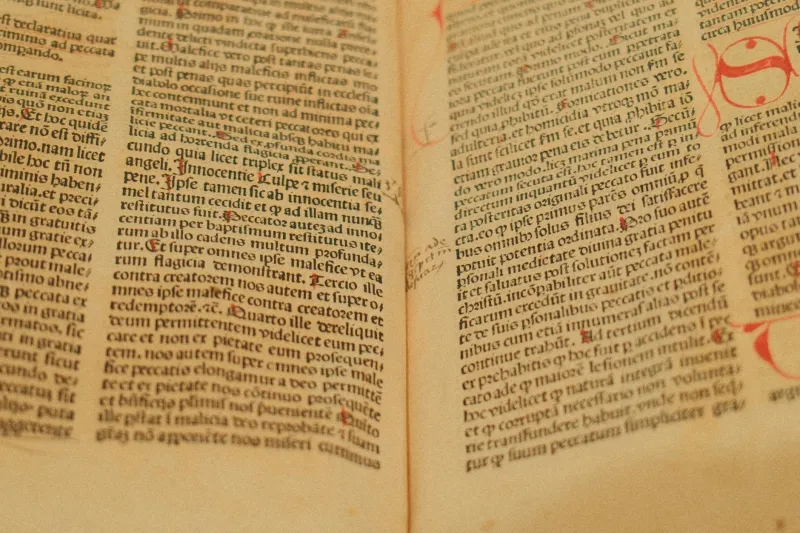
The Manuscript as Murder Weapon
When Shakespeare wrote Richard III as a hunchbacked monster who murdered children, he wasn't drawing from archaeological evidence or court records. He was recycling a character assassination that began in monastery scriptoriums five centuries earlier, penned by monks who had never met the king but knew exactly what their Tudor patrons wanted to hear.
This pattern repeats across medieval chronicles with such consistency that it reveals something fundamental about human nature: those who survive political upheavals always rewrite the losers as monsters. The technology changes, but the psychology remains identical to every modern scandal where the winners get to tell their version first.
The Monastery News Network
Medieval chroniclers operated under constraints that would make today's partisan media look balanced. Most were monks whose monasteries depended on royal patronage, meaning their historical accounts were essentially commissioned hit pieces disguised as objective records. When a new dynasty took power, previous rulers suddenly developed posthumous personality disorders that aligned perfectly with their successors' propaganda needs.
Consider the case of King John of England, forever known as the villainous usurper who lost the crown jewels in a marsh. The chroniclers who created this image were writing under his enemies' protection, decades after his death. John's actual crime was losing a war against the French and taxing the Church to pay for it. But in the hands of monastic historians, military failure became tyrannical cruelty, and fiscal policy became evidence of moral corruption.
The psychological mechanism here is identical to what happens in modern corporate takeovers or political transitions. New leadership needs to justify its existence by proving the previous regime was fundamentally flawed. Medieval chroniclers simply had more colorful metaphors and fewer fact-checkers.
The Economics of Reputation Destruction
Medieval historical writing operated on the same economic incentives that drive modern media: sensational stories about powerful villains sell better than nuanced accounts of complex political situations. Chroniclers competed for patronage by producing the most compelling narratives, and compelling meant dramatic moral clarity rather than historical accuracy.
This explains why figures like Nero, Caligula, and Richard III share remarkably similar character profiles despite living in different centuries and cultures. They're not historical portraits but literary archetypes, crafted to satisfy audiences who wanted their politics explained through simple moral frameworks. The specific details varied, but the template remained constant: the good ruler's enemy must be a monster.
American readers will recognize this pattern from every presidential transition, where the previous administration's policies are retroactively reframed as either visionary or catastrophic depending on who's writing the analysis. The scale has expanded from monastery to global media, but the fundamental dynamic remains unchanged.
When Surviving Means Rewriting
The most successful character assassinations in medieval chronicles came from writers who had personal reasons to hate their subjects. Thomas More's account of Richard III, which became the foundation for centuries of historical interpretation, was written by a man whose career depended on Tudor approval. More never met Richard, but he knew exactly what story would advance his own political prospects.
This creates a systematic bias in historical records that modern historians are still trying to untangle. The sources closest to events are often the least reliable, because they were written by people with the strongest motives to distort them. Medieval chroniclers understood that history is written by survivors, not witnesses.
The psychological principle operating here transcends any particular historical period. When social or political systems collapse, the people who emerge with power need to explain why the previous system failed. Creating villain narratives serves this function perfectly, transforming complex structural problems into simple moral tales about individual corruption.
The Persistence of Medieval Spin
What makes medieval character assassination so effective is its durability. Once a reputation is destroyed in writing, it becomes extremely difficult to rehabilitate, especially when the original sources are treated as authoritative historical documents. Richard III's reputation only began recovering in the 20th century, five hundred years after his death, when historians finally started questioning their sources' motives.
This persistence reveals something crucial about human psychology: we prefer simple explanations that assign moral responsibility to individuals rather than complex analyses that distribute causation across systems and circumstances. Medieval chroniclers exploited this preference systematically, creating villain narratives that satisfied their audiences' psychological needs while serving their own political interests.
The same dynamic operates in contemporary political discourse, where complex policy failures are routinely reduced to character flaws in individual leaders. The technology for creating and spreading these narratives has evolved dramatically, but the underlying psychological appeal remains identical to what medieval monks discovered centuries ago.
Reading History Like a Crime Scene
Understanding medieval chroniclers' methods changes how we should approach any historical narrative, including contemporary ones. Every account of political events is written by someone with interests, biases, and incentives that shape their version of truth. The question isn't whether sources are biased—they always are—but what those biases reveal about the power structures that produced them.
Medieval chroniclers were humanity's first professional spin doctors, and their techniques remain the foundation for how political narratives are constructed today. Recognizing their methods in historical sources makes us better equipped to identify similar patterns in contemporary media, where the stakes and scale have changed but the fundamental psychology remains constant.
The next time you encounter a historical villain who seems too perfectly evil to be believable, consider the possibility that you're reading medieval fan fiction disguised as historical fact. The writers are long dead, but their propaganda lives on.