The Permanent Empire Fallacy: What History Tells Us About Civilizations That Believed They Would Last Forever
The Permanent Empire Fallacy: What History Tells Us About Civilizations That Believed They Would Last Forever
In 1992, the political scientist Francis Fukuyama published an essay — later expanded into a book — arguing that the collapse of the Soviet Union represented not merely the end of the Cold War but something more fundamental: the end of history itself. Liberal democracy, he proposed, had defeated its ideological competitors, and what lay ahead was not the drama of competing civilizations but the long, quiet administration of a world that had, in the most important sense, already been settled.
The argument attracted enormous criticism, some of it deserved. But the criticism largely missed the more interesting point, which was not whether Fukuyama was right, but why the argument felt so natural — so obvious, so inevitable — to so many readers in that particular moment. The answer to that question reaches back considerably further than 1992.
Every Peak Looks Like a Plateau
The Han Dynasty, which unified China in the second century BC and ruled for four centuries, generated an elaborate cosmological and philosophical framework in which the Han emperor was the pivot of a stable, divinely ordered universe. Confucian political theory, as it developed under Han patronage, did not merely justify Han rule — it described the Han order as the natural endpoint of historical development, the resolution of the chaos that had preceded it.
The Han Dynasty collapsed in 220 AD.
Victorian Britain produced a remarkably similar intellectual architecture. The civilizing mission — the idea that British imperial expansion was not conquest but the generous extension of order, law, and progress to peoples not yet capable of governing themselves — was not, for most of its proponents, cynical propaganda. It was a genuinely held belief, supported by a reading of history that placed Britain at its apex and projected British institutions forward indefinitely. Rudyard Kipling was not a hypocrite. He was a man who believed, with complete sincerity, that the world he lived in was the world that would endure.
The British Empire, on which the sun famously never set, had largely dissolved by 1960.
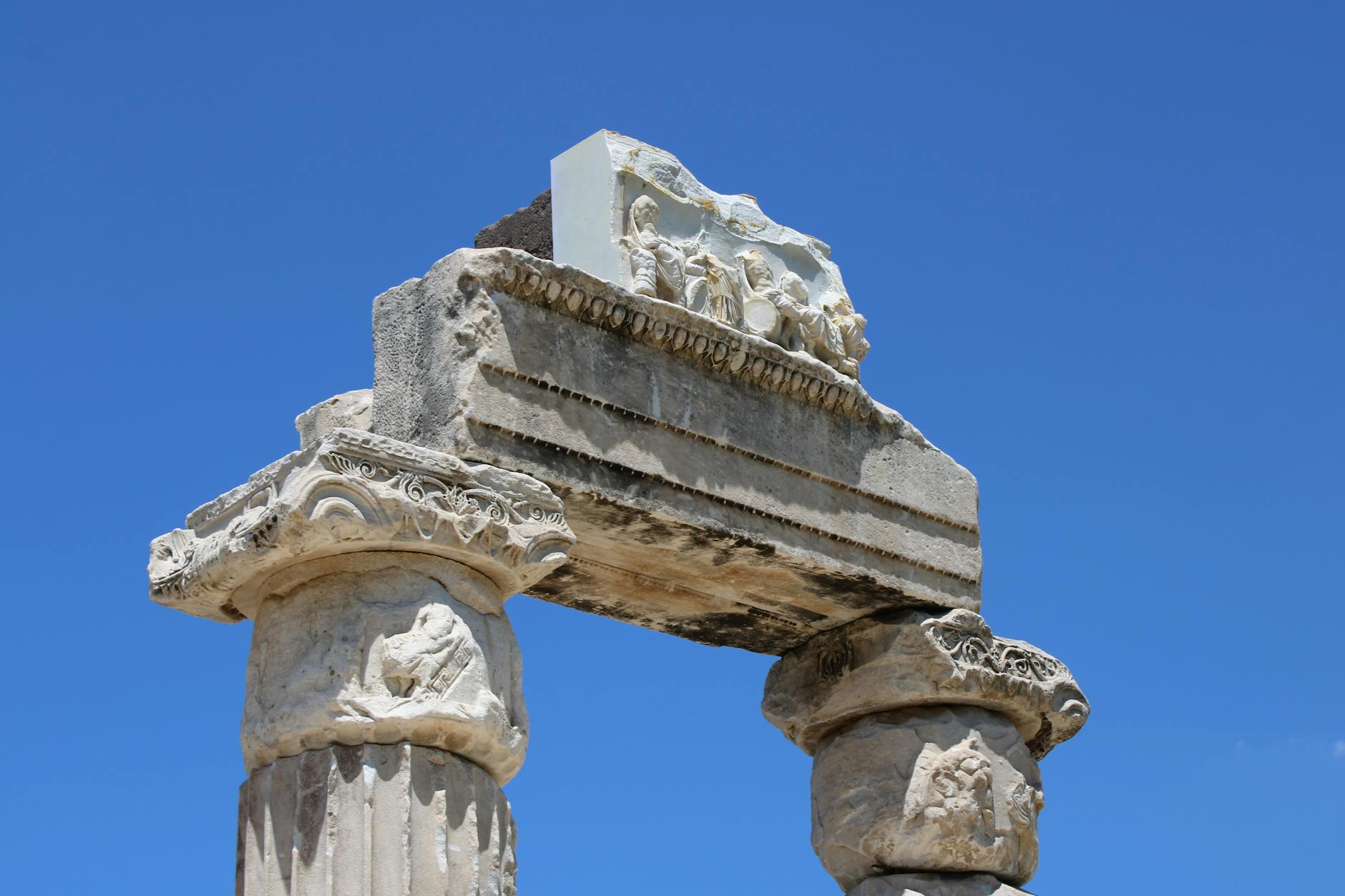
Rome — always Rome, the case that seems to illuminate everything — offers perhaps the most instructive example. Roman writers of the Augustan period did not merely celebrate Rome's power. They theorized its permanence. Virgil's Aeneid contains the famous promise of imperium sine fine — empire without end. Roman historians described the city as the culmination of all previous history, the destination toward which everything before it had been traveling. This was not boastfulness. It was, within the intellectual framework available to a Roman of the first century BC, a reasonable interpretation of the evidence.
Rome fell — or transformed, depending on how you date it — between the third and fifth centuries AD.
Why Power Generates This Belief
The persistence of this pattern across cultures, centuries, and radically different political systems is not accidental. It reflects something consistent about the relationship between dominance and perception.
When a civilization is at or near its peak, several things are simultaneously true. Its institutions are functioning well enough to maintain order. Its ideology has successfully explained the world to the satisfaction of most of its educated class. Its military or economic power has, for the moment, answered the most serious challenges to its authority. And — crucially — the people doing the thinking are the people who have benefited most from the existing order. They are not, in most cases, inclined to imagine its replacement.
This is not corruption. It is a straightforward consequence of how human cognition works. We build our models of the future from the materials the present provides. When the present is stable and powerful, those models tend to project stability and power forward. The exceptions — the Cassandras, the Gibbons, the Toynbees — are remarkable precisely because they are exceptions. The baseline human tendency, operating inside a functioning civilization, is to assume that the civilization will continue to function.
History, viewed from outside any particular moment, suggests this assumption is approximately always wrong.
The Practical Consequences of Believing You Are the Last Empire
This is not merely an intellectual curiosity. The belief in one's own permanence has concrete policy consequences, and they tend, over time, to be damaging ones.
Empires that believe themselves permanent tend to under-invest in succession planning. Why develop robust institutions for transferring power when power, by definition, will remain where it is? The late Roman Republic's inability to develop stable mechanisms for managing its own political transitions — a failure that contributed directly to a century of civil war — was not a random institutional failure. It was downstream of a genuine belief that the Republic's basic structure was immutable.
Civilizations that believe themselves to be the endpoint of history tend to interpret challenges to their order as aberrations rather than signals. When the first serious barbarian incursions breached Roman defenses in the third century, the Roman response was, for several decades, to treat the problem as a temporary military matter rather than a structural one. The idea that the incursions might represent the opening phase of a fundamental transformation was, for most Roman administrators, literally unthinkable — not because they were stupid, but because the intellectual framework available to them had no category for Rome's replacement.
And civilizations that have convinced themselves of their own permanence tend to make long-term investments with a confidence that, in retrospect, looks like hubris. They build infrastructure, extend credit, and make geopolitical commitments on the assumption that the order underwriting those investments will persist indefinitely. When the order shifts — as it always does — the stranded investments and the broken commitments become compounding liabilities.
What a Different Assumption Would Change
None of this is a prediction. It would be its own version of the permanent empire fallacy to argue that because every previous dominant power has eventually declined, the United States must therefore be in terminal decline now. History establishes the pattern. It does not set the schedule.
What it does offer is a practical reframe. The question is not whether American dominance is permanent — history's answer to that question is unambiguous enough to require no elaboration. The question is what decisions look different when you stop assuming it is.
Infrastructure investments look different. The case for maintaining roads, power grids, and water systems that will outlast any particular political configuration becomes stronger, not weaker, when you take seriously the possibility that the configuration will change. Institutional design looks different. Checks, balances, and succession mechanisms that seem like unnecessary friction in a stable system become essential load-bearing elements when you model the system under stress. Foreign policy looks different. Commitments made on the assumption of permanent preponderance carry different risk profiles than commitments made with an honest accounting of the historical record.
And perhaps most importantly, the tolerance for domestic institutional decay looks different. Every empire in the historical record that has declined has done so through a combination of external pressure and internal erosion. The external pressure is typically the part that gets written into the history books. The internal erosion is typically the part that made the external pressure decisive.
History as the Longer Experiment
The two methods we have for understanding human behavior are laboratory experiments conducted on contemporary subjects, and the entire recorded history of human civilization. The laboratory is useful for establishing mechanisms. The history is useful for establishing what those mechanisms produce over time, at scale, under real conditions.
On the question of whether any civilization has successfully exempted itself from the pattern of rise, peak, and transformation, the historical record is, so far, unanimous.
That is not a counsel of despair. It is an invitation to think more clearly — to make decisions calibrated to what history actually shows rather than to the story that power, in any era, tends to tell about itself.
The Roman senators who voted in the Forum believed they were legislating for eternity. In a sense, they were right — just not in the sense they intended. Their decisions echo forward through two millennia not because Rome was permanent, but because the human patterns they expressed were.