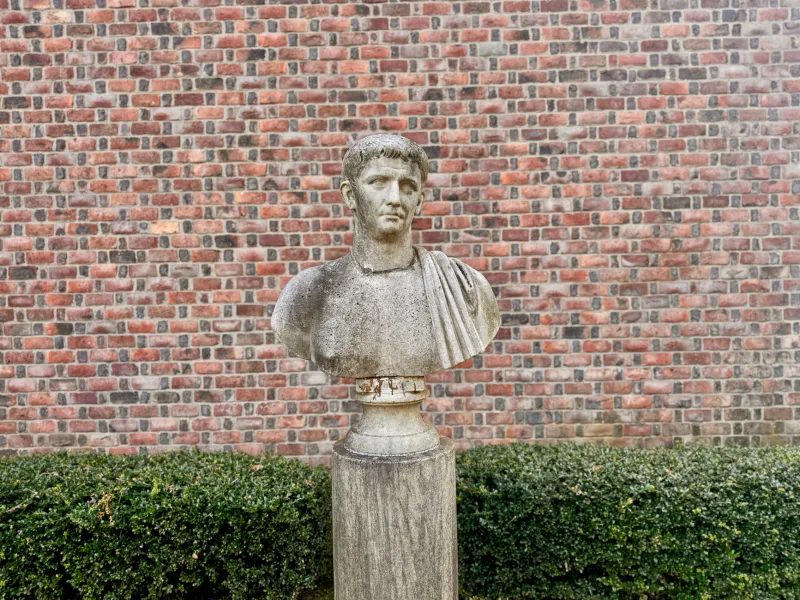
The Poisoned Crown: When History's Most Powerful Offices Were Accepted in Terror
In the winter of 96 CE, a Roman senator named Marcus Cocceius Nerva was informed that he had been selected by his colleagues to serve as emperor of Rome. He was sixty-five years old, in poor health, and possessed of sufficient historical knowledge to understand precisely what had happened to the last several men who had held that position. His reported response was not celebration. Contemporary sources suggest something closer to despair.
Nerva's instinct was correct. His reign lasted sixteen months. He spent much of it in a state of barely concealed terror, managing a Praetorian Guard that openly despised him and a Senate that had chosen him primarily because he was too weak to threaten anyone. He survived his term, which was more than could be said for many of his predecessors, but 'survived' is doing significant work in that sentence.
His story is not unusual. It is, across the full breadth of recorded history, nearly the norm.
The Mathematics of the Summit
The position of supreme authority has always carried a specific mathematical problem that observers at a distance tend to underweight: the higher the office, the fewer the options for what comes next. A junior administrator who fails can be reassigned, demoted, or quietly retired. A provincial governor who loses favor can be recalled and forgotten. A supreme ruler who falls from power has, in most historical contexts, nowhere to go that is not either a prison, an exile, or a grave.
This is not a modern observation. Roman senators of the imperial period understood it explicitly. The Chinese imperial court developed extensive literature on the subject. Ottoman princes who failed to secure the succession faced a formalized version of this logic: when a new sultan took power, his brothers were frequently strangled with a silken cord, a method chosen specifically because it shed no royal blood. The office of potential emperor was, for most Ottoman princes, a death sentence with an uncertain timeline.
The men who accepted supreme power under these conditions were not, in most cases, unaware of the risk. They accepted it anyway. The question of why they did so is one of the more revealing questions that history offers.
Reluctant Emperors and the Refusal That Wasn't Possible
The Roman imperial record is populated with men who performed reluctance upon accepting power, and historians have long debated how much of that performance was genuine. Augustus famously declined the title of dictator and accepted only the more ambiguous designation of princeps—first citizen—in a theatrical display of republican modesty that fooled no one and was probably not intended to.
But the reluctance of later emperors was frequently less theatrical and more desperate. When Claudius was discovered hiding behind a curtain in the palace following the assassination of Caligula in 41 CE, and was dragged out by Praetorian soldiers who declared him emperor, his terror appears to have been entirely genuine. Claudius was a scholar, a historian, a man who had spent his entire adult life cultivating irrelevance as a survival strategy. He understood, better than almost anyone, what the emperorship had done to its previous holders.
He accepted it because the alternative—declining the offer of soldiers who had already killed one emperor that day—was not, in any practical sense, an alternative at all.
This is the mechanism that recurs most consistently across historical examples of reluctant supreme authority: the refusal was not actually available. The choice was between accepting the office and accepting the consequences of declining it, and those consequences were frequently indistinguishable from the worst outcomes the office itself could produce.
The Drafted General
Military history offers a parallel pattern in the figure of the commander who is elevated to supreme command precisely because a crisis has made the position too dangerous for anyone who actually wants it.
The appointment of Ulysses Grant to command the Union armies in 1864 has this quality, though the American context softens it considerably. Grant himself understood that the position of general-in-chief during the grinding final phase of the Civil War was not an honor so much as an assignment—one that would either produce victory or produce a scapegoat. His predecessors had mostly produced the latter.
In less forgiving historical contexts, the drafted general faced stakes that made Grant's situation look comfortable. The Carthaginian practice of crucifying unsuccessful commanders ensured that the position of commanding general during a difficult campaign was one that capable officers sometimes went to considerable lengths to avoid. The general who accepted command of a failing expedition was not being honored. He was being handed a problem that everyone else had declined.
Obligation as the Mechanism
Across these varied contexts—reluctant emperors, drafted commanders, unwilling heirs—the mechanism that most consistently overcomes individual terror is not ambition. It is obligation. The sense that refusal would be a form of betrayal, cowardice, or social destruction that is worse, in its own way, than the dangers of acceptance.
This is a distinctly human calculation, and it has not changed in five thousand years. The same dynamic that drove Nerva to accept an emperorship he did not want drives the reluctant executive who accepts a failing company's top position because declining would end a career, or the politician who runs for an office they understand to be a trap because their party has no one else.
The office does not become less dangerous because the person filling it understands the danger. It becomes, if anything, more poignant. The clear-eyed acceptance of a poisoned crown is not a failure of judgment. It is, in many cases, the most rational response available to a person whose options have been narrowed to a single door.
What the Pattern Reveals
The historical frequency of reluctant supreme power suggests something that runs counter to the popular understanding of how ambition works. The people who end up holding the most consequential positions are not always—or even primarily—the people who wanted those positions most fiercely. They are frequently the people who could not find a way to refuse them.
This matters because it means that the psychology driving decisions at the highest levels of power has often been the psychology of the trapped rather than the triumphant. The decisions made by rulers who accepted their positions in terror, who understood the expiration date written into their office, who had no exit available to them—these decisions shaped the world. And they were made by people who, given any genuine choice, might well have chosen differently.
History is generous with irony. The poisoned crown is one of its oldest gifts.