Sacred Secrets: How Medieval Priests Became History's Most Trusted Spies
The Laboratory of Human Nature
While modern researchers struggle to understand human behavior through controlled experiments with college volunteers, medieval Europe conducted the longest-running psychological study in human history. For over a millennium, the Catholic Church's confessional system created an unparalleled window into the human soul, collecting data on human nature that no laboratory could ever replicate.
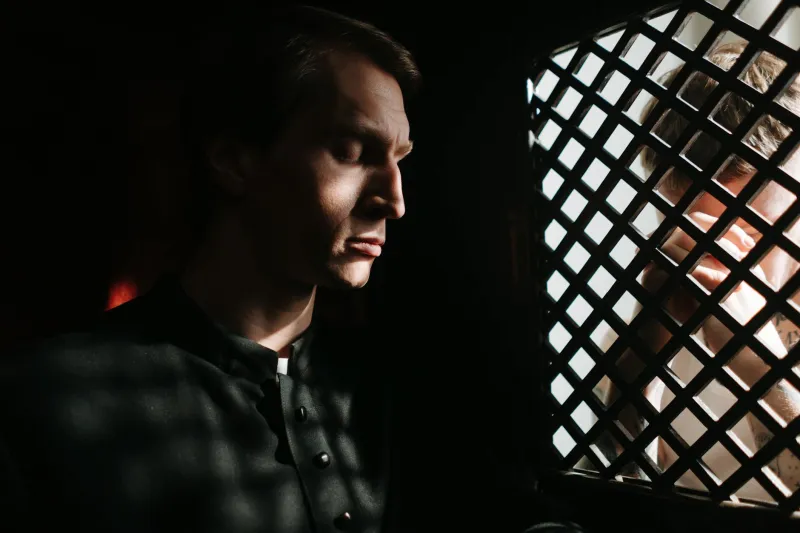
The sacrament of confession, formalized in the Fourth Lateran Council of 1215, required every Christian to confess their sins to a priest at least once annually. What emerged was not merely a religious practice, but an intelligence network of breathtaking scope and sophistication. From the humblest village church to the grandest cathedral, priests became repositories of their communities' darkest secrets, creating a surveillance system that would make modern intelligence agencies envious.
The Architecture of Intimate Surveillance
The genius of the confessional lay not in its technology, but in its psychology. Unlike modern surveillance, which people resist and evade, confession exploited humanity's deepest need for absolution. The same psychological drives that lead people today to overshare on social media or seek therapy compelled medieval Europeans to voluntarily divulge their most guarded secrets.
Priests heard everything: adultery among the nobility, tax evasion by merchants, treasonous thoughts against kings, family feuds, business disputes, and personal vendettas. They learned which marriages were failing, which merchants were cheating, which nobles were plotting, and which peasants harbored rebellious thoughts. The confessional booth became a data collection point more comprehensive than any modern survey or focus group.
The system's effectiveness stemmed from its universality. Unlike intelligence networks that target specific individuals or groups, confession captured the entire social spectrum. A single priest might hear the secrets of a lord's wife in the morning and his servant's confession in the evening, creating a complete picture of household dynamics that no external observer could achieve.
When Sacred Trust Became Political Currency
The promise of confidentiality under the "seal of confession" was supposed to protect these secrets, but human nature proved stronger than sacred vows. Priests were, after all, human beings embedded in complex social and political networks. They had families to protect, careers to advance, and loyalties that extended beyond their religious duties.
Historical records reveal countless instances where confessional secrets leaked into the broader world. During the English Reformation, priests loyal to Rome shared intelligence about Protestant sympathizers with Catholic networks. In France, confessors to the nobility often found themselves caught between their religious obligations and pressure from political factions seeking information about their rivals.
The most dramatic examples involved royal confessors, who heard the sins and fears of kings and queens. These priests wielded enormous soft power, often becoming unofficial advisors whose influence stemmed from their intimate knowledge of royal psychology. When King Louis XI of France confessed his fears about succession or his guilt over political murders, his confessor gained leverage that no formal political position could provide.
The Economics of Spiritual Intelligence
The confessional system also revealed timeless patterns in human economic behavior. Priests regularly heard confessions about tax evasion, price manipulation, and fraudulent business practices. These admissions provided church authorities with detailed intelligence about economic conditions and merchant behavior across their territories.
Some historians argue that the church's detailed knowledge of economic sins helped it develop more sophisticated approaches to taxation and regulation. When priests knew which merchants were cheating customers or which guilds were fixing prices, church authorities could apply targeted pressure or offer strategic absolutions that influenced market behavior.
This economic intelligence also flowed upward through church hierarchies. Bishops compiled reports based on confessional patterns, creating early forms of economic surveying that informed both religious and secular policy. The church's understanding of human greed and economic anxiety, gathered through centuries of confessions, influenced everything from usury laws to charitable practices.
The Psychology of Voluntary Surveillance
The confessional's success illuminated fundamental aspects of human psychology that remain unchanged today. People willingly surrendered their privacy in exchange for psychological relief, social acceptance, and the promise of forgiveness. The same drives that lead modern individuals to share personal information with corporations in exchange for convenience or social connection motivated medieval Christians to confess their secrets to priests.
The ritual also exploited humanity's need for narrative structure. Confession required individuals to organize their moral failures into coherent stories, forcing them to analyze and articulate their motivations. This process often revealed more than the confessants intended, as priests learned to read between the lines of these carefully constructed narratives.
Lessons for the Modern Surveillance State
The medieval confessional system offers sobering insights for contemporary debates about privacy and surveillance. It demonstrates that the most effective intelligence gathering doesn't require coercion or advanced technology—it simply needs to fulfill genuine human psychological needs.
Modern social media platforms, therapy apps, and customer service interactions often function as digital confessionals, collecting intimate personal data under the promise of connection, healing, or assistance. Like medieval priests, the corporations and institutions that receive this information face constant temptations to use it for purposes beyond their stated mission.
The confessional also reveals the futility of assuming that formal rules will contain human nature. Despite severe religious and legal penalties for breaking confessional confidentiality, priests regularly found ways to act on the information they received. Similarly, modern privacy policies and data protection laws struggle against the fundamental human tendency to use valuable information for personal or institutional advantage.
The Enduring Appeal of Absolution
Perhaps most importantly, the success of the medieval confessional system demonstrates humanity's enduring willingness to trade privacy for the promise of forgiveness and acceptance. Whether seeking absolution from a priest, validation from social media followers, or understanding from a therapist, people consistently choose psychological relief over privacy protection.
This pattern suggests that debates about surveillance and privacy must account for deep-seated human psychological needs rather than assuming that people will prioritize abstract concepts of privacy over immediate emotional benefits. The medieval church understood this psychology centuries before modern behavioral economists began studying it, creating a system that harvested human secrets more effectively than any surveillance technology ever developed.
The confessional booth may have been replaced by digital platforms and therapeutic relationships, but the fundamental transaction remains unchanged: humans will always seek absolution, and those who promise it will always gain access to our most intimate secrets.