Stone Speaks Louder Than Words: The Ancient Art of Building Authority Into Bedrock
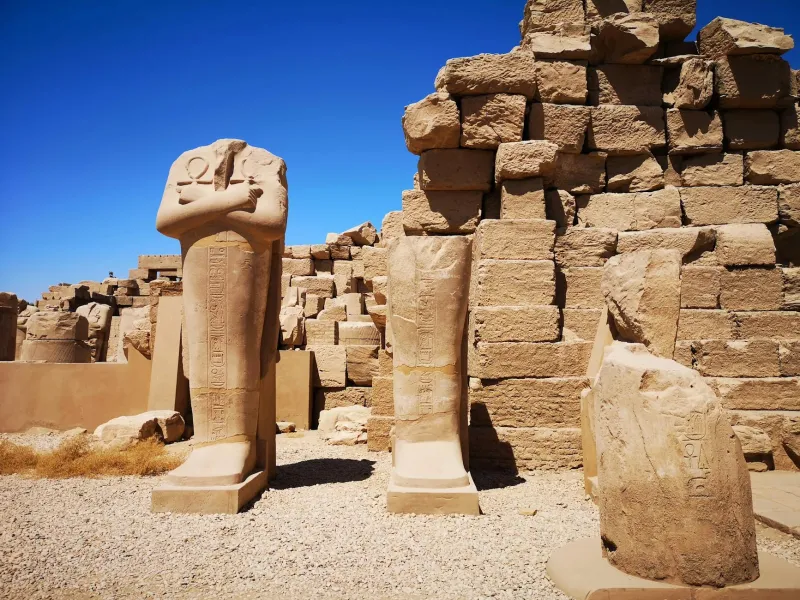
The Mathematics of Awe
When Ramesses II ordered his architects to carve four 65-foot statues of himself into the cliff face at Abu Simbel, he wasn't commissioning art. He was engineering submission. The pharaoh understood what modern neuroscience has confirmed: humans are hardwired to interpret physical scale as social dominance. Those colossal figures weren't meant to be beautiful—they were meant to make anyone approaching from the Nile feel like an ant.
This wasn't unique to Egypt. Every civilization that lasted more than a generation figured out the same psychological trick. The human brain processes architectural monumentality as a direct threat assessment, triggering the same neural pathways that once helped our ancestors determine whether to fight or flee when confronted by something larger than themselves. Ramesses was simply the first to weaponize interior design on a national scale.
Consider the psychological calculation behind those Abu Simbel colossi. A visitor approaching by boat would see the statues grow larger and more imposing with each stroke of the oars. By the time they reached the temple entrance, they would have spent twenty minutes watching stone faces the size of apartment buildings stare down at them with perfect, eternal composure. The message was unmistakable: you are temporary, I am permanent.
The Roman Formula for Manufactured Legitimacy
Rome perfected what Egypt had started, turning architecture into a systematic program of psychological conditioning. Roman engineers didn't just build roads and aqueducts—they built the infrastructure of imperial authority. Every triumphal arch was positioned with the precision of a chess move, forcing citizens to walk beneath carved depictions of their emperor's victories on their way to the forum.
The genius lay in making submission feel voluntary. Unlike Egyptian monuments, which inspired fear through sheer scale, Roman architecture seduced citizens into complicity. The Pantheon's dome, still the largest unreinforced concrete dome ever built, was designed to make visitors feel simultaneously dwarfed and elevated. Standing beneath that perfect sphere of stone, citizens experienced what architects call "manufactured transcendence"—the feeling that they were part of something greater than themselves, something that would outlast their brief lives.
This wasn't accidental. Roman architects studied human psychology with the same rigor their engineers applied to bridge construction. They understood that power built into stone didn't need to be defended with swords. Citizens who felt small in the presence of imperial architecture would police themselves, internalizing the hierarchy that surrounded them in marble and travertine.
The American Inheritance
Walk through Washington, D.C., and you're experiencing the same psychological programming that worked on Roman citizens two thousand years ago. The Lincoln Memorial's 36 Doric columns weren't chosen for their aesthetic appeal—they were calculated to trigger the same neural response that made Egyptian peasants prostrate themselves before temple gates. Daniel Chester French's 19-foot statue of Lincoln serves the identical function as those Abu Simbel colossi, using scale to transform a political figure into something approaching divinity.
The Supreme Court building makes the connection even more explicit. Cass Gilbert's design deliberately echoes Roman temple architecture, complete with Corinthian columns and a triangular pediment carved with allegorical figures. Citizens climbing those marble steps are meant to feel the weight of institutional authority pressing down on them before they even enter the courtroom. The building's message is ancient and unmistakable: the law is bigger than you are.
Modern corporate architecture operates on the same principles. The glass towers of Manhattan aren't just office buildings—they're monuments to economic power, designed to make anyone standing at their base feel the appropriate sense of scale. When JPMorgan Chase commissioned their 52-story headquarters at 270 Park Avenue, they weren't just buying office space. They were purchasing the psychological real estate that comes with having the tallest building in Midtown.
The Persistence of Stone Psychology
The most remarkable aspect of architectural authority isn't how it's evolved—it's how little it's changed. The same psychological mechanisms that made ancient Egyptians feel awe in the presence of pyramid complexes still govern how Americans respond to the Capitol dome or the Gateway Arch. Human neurology hasn't updated its software in the five millennia since the first pharaoh figured out that bigger buildings meant bigger authority.
This explains why every regime, democratic or authoritarian, invests enormous resources in monumental architecture. The Soviet Union's Palace of the Soviets was designed to be taller than the Empire State Building. Hitler's planned Volkshalle would have dwarfed St. Peter's Basilica. Even the European Union, ostensibly committed to modest democratic values, built the European Parliament in Strasbourg to look like an unfinished Tower of Babel—a not-so-subtle message about their ambitions for continental unity.
The Unbuilt Messages
Perhaps the most telling evidence for architecture's psychological power lies in what doesn't get built. Every abandoned monument represents a moment when political authority couldn't sustain the psychological energy required to complete its stone messaging system. The Soviet Palace of the Soviets, never finished, became an accidental monument to the regime's ultimate weakness. Hitler's Volkshalle exists only in blueprints, a reminder that even the most totalitarian governments need popular buy-in to transform psychological domination into physical reality.
In America, our unfinished monuments tell their own story. The Washington Monument sat half-built for decades, a 150-foot stone stump that accidentally symbolized a nation unsure of its own authority. Only when the Civil War settled questions about federal power could Congress find the political will—and the psychological confidence—to complete what they had started.
The lesson is ancient but enduring: power that can't build monuments to itself isn't really power at all. Architecture remains the most honest measure of political authority because stone doesn't lie. Every civilization gets the monuments it deserves, and every monument reveals exactly how much psychological authority its builders actually possessed. The pharaohs understood this. So did the Romans. And so do the architects still carving authority into skylines across America today.