What the Cheap Seats Knew: The Hidden Psychology of Low-Status Entertainment
Every civilization produces two kinds of spectacle. The first is the kind it intends to be remembered for: the triumphal procession, the state tragedy performed in a marble amphitheater, the religious pageant staged at enormous public expense. The second is the kind that happens in the alley behind the amphitheater, in the tavern, at the corner where a man with a trained monkey has drawn a crowd of thirty people who could have gone anywhere else and chose this.
Historians have always preferred the first kind. It is better documented, more photogenic, and far more flattering to the civilizations that built the archives. But if human psychology has remained essentially constant across five thousand years—and the evidence strongly suggests it has—then what people chose to watch when nobody was making them choose is arguably the more honest document. The cheap seats, it turns out, kept better records than the senate.
The Approval Gap Between Official Culture and Actual Taste
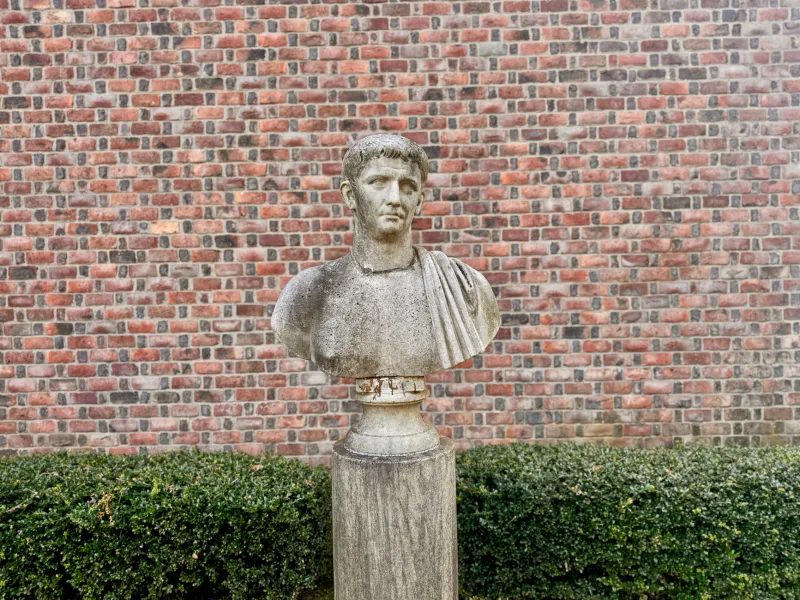
The Roman state invested heavily in theatrical productions drawn from Greek dramatic tradition. These plays were officially prestigious, philosophically serious, and frequently attended by people who found them tolerable at best. What those same Romans actually packed into their evenings was mime—a low, physical, often obscene performance genre that the educated class deplored with a consistency that tells you everything. Cicero complained about it. Moralists condemned it. Emperors occasionally banned it. And audiences kept filling the temporary wooden stages where mime performers worked, generation after generation, because it gave them something the approved theater did not: recognizable human beings in impossible situations, making the wrong choices for understandable reasons.
The approval gap between official culture and actual taste is not a Roman peculiarity. It is a constant. Medieval European authorities viewed the traveling jongleur with the same mixture of contempt and suppressed anxiety that Roman senators brought to the mime stage. The jongleur's repertoire—bawdy songs, satirical impersonations of clergy and nobility, stories in which the clever poor man outsmarts the powerful rich one—was officially beneath notice and practically irresistible. Church councils spent considerable energy condemning performances that drew crowds the Sunday sermon could not match.
What were those crowds responding to? Not mere vulgarity, though vulgarity was certainly present. They were responding to a narrative logic that official culture refused to supply: the acknowledgment that the social order was arbitrary, that the people on top were not necessarily better, and that this was funny rather than tragic. You cannot say that in a state ceremony. You can say it, obliquely and deniably, through a puppet.
Gambling as Social Commentary
The history of gambling is inseparable from the history of every complex society that has ever existed, which is itself a significant fact. No civilization has managed to eliminate it; the most any have achieved is driving it into different rooms. What varies across cultures is not the appetite for games of chance but the specific games that dominate, and those games are not chosen randomly.
In societies with rigid hereditary hierarchies, gambling games that simulate a sudden reversal of fortune—where a poor man can, in a single turn, hold more than a nobleman—tend to flourish with particular intensity. The dice game is not just entertainment in such a context; it is a controlled experiment in an alternative social physics, one where birth means nothing and luck is egalitarian. That experiment is conducted millions of times, in taverns and back rooms and on street corners, by people who have no other venue in which to run it.
Nineteenth-century American frontier gambling culture is instructive here. The card games that spread through mining camps and cattle towns were not simply pastimes. They were among the few social spaces in which a man's previous life was considered irrelevant—where a former slave, a disgraced banker, and a Mexican vaquero might sit at the same table under identical rules. The official culture of that era was elaborately hierarchical. The poker table was not. The enormous popularity of those games was not coincidental.
The Street Performer's Diagnostic Function
Street performance has existed wherever urban populations have gathered, and it has always occupied an interesting position: technically marginal, practically central. The street performer has no venue to protect, no patron to satisfy, and no subscription audience to retain. The crowd that gathers can disperse in ten seconds. This makes street performance the purest market test in the history of entertainment—the performer must earn attention continuously or lose it immediately.
What street performers have consistently chosen to perform, across wildly different cultures and centuries, clusters around a recognizable set of themes: the humiliation of the powerful, the triumph of the physically marginal, the exposure of pretension, and the comedy of bodily existence. These are not the themes of official culture in any era. They are, however, the themes that reliably stop people on their way to somewhere else.
The Ottoman Karagöz shadow puppet tradition, which spread across the Mediterranean world from roughly the fourteenth century onward, centered on a deliberately uneducated, socially low, physically grotesque character who consistently outwitted his social superiors through a combination of animal cunning and shamelessness. He was, by any official standard, a figure of contempt. He was also, for several centuries, one of the most beloved characters in an enormous swath of the world. The psychological need that character served—for a protagonist who operated entirely outside the rules of decorum and still prevailed—was not being served anywhere else.
What the Minor Amusements Contradict
The most revealing quality of low-status entertainment is not what it contains but what it contradicts. Every civilization maintains an official account of its own values: its commitment to order, its reverence for hierarchy, its belief in the moral logic of its social arrangements. The entertainment that ordinary people choose freely, without instruction, tends to quietly undermine every one of those claims.
A society that officially venerates martial valor fills its evenings with comedies about cowardly soldiers. A culture that publicly celebrates chastity sustains a thriving market in bawdy performance. An empire that insists on the natural superiority of its ruling class watches puppet shows in which that class is consistently made to look foolish. These are not contradictions that require elaborate explanation. They are the sound of human beings being honest in the only venue where honesty was not penalized.
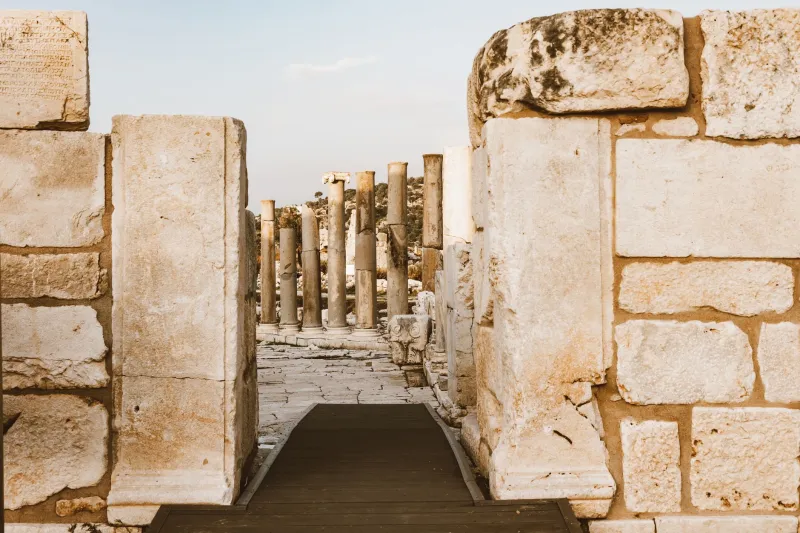
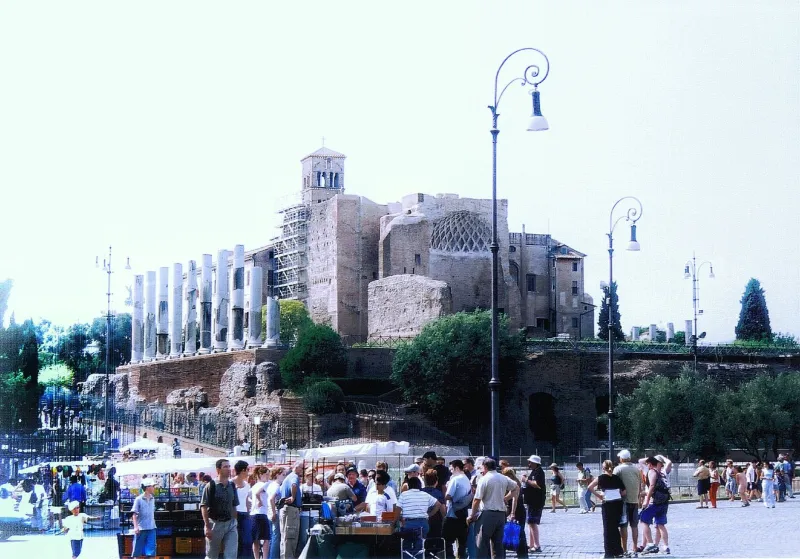
For the modern traveler moving through the ruins of old civilizations—standing in a Roman forum, walking the stones of a medieval market town, navigating the preserved quarters of an Ottoman city—the official monuments tell one story. But the spaces where the minor entertainments happened, the corners and alleys and open squares where no ceremony was ever staged, tell another. That second story is usually more accurate. And it is, without exception, more interesting.