Foreign Counsel: The Dangerous Logic of Trusting Outsiders with Power

The Emperor's Dilemma
In 988 CE, Byzantine Emperor Basil II faced a problem that would have been familiar to rulers across the ancient world: he could not trust anyone close to home. Domestic nobles had their own armies, their own territories, and their own ambitions for the throne. Local generals commanded the loyalty of troops who shared their language, culture, and grievances against imperial taxation. Even his own family members represented potential threats to his authority.
 Photo: Basil II, via i.etsystatic.com
Basil's solution was radical but not unprecedented: he hired six thousand Viking warriors from the Kievan Rus to serve as his personal guard. These Norsemen had no stake in Byzantine politics, no local alliances to protect, and no realistic path to claiming the imperial crown for themselves. They were perfect soldiers precisely because they were perfect strangers.
The Varangian Guard, as they became known, would serve Byzantine emperors for the next three centuries. They were effective not despite their foreign origin, but because of it. Their loyalty could be bought because they had nothing else to sell.
The Mathematics of Mistrust
The pattern of foreign advisors appears across unconnected civilizations with such consistency that it suggests something fundamental about the psychology of power. Chinese emperors employed Sogdian merchants as diplomats, Mongol dynasties relied on Persian administrators, and Ottoman sultans elevated Christian converts to the highest positions in government.
The logic was always the same: outsiders had nowhere else to go.
Consider the career of Yelu Chucai, a Khitan nobleman who became the chief advisor to Genghis Khan and later to his son Ögedei Khan. Yelu Chucai had been educated in Chinese classical tradition, understood Confucian administrative principles, and possessed the bureaucratic skills the Mongols lacked. But his value to the Great Khan was not merely technical. As a member of a conquered people, Yelu Chucai had no realistic prospect of building an independent power base. His survival depended entirely on Mongol favor.
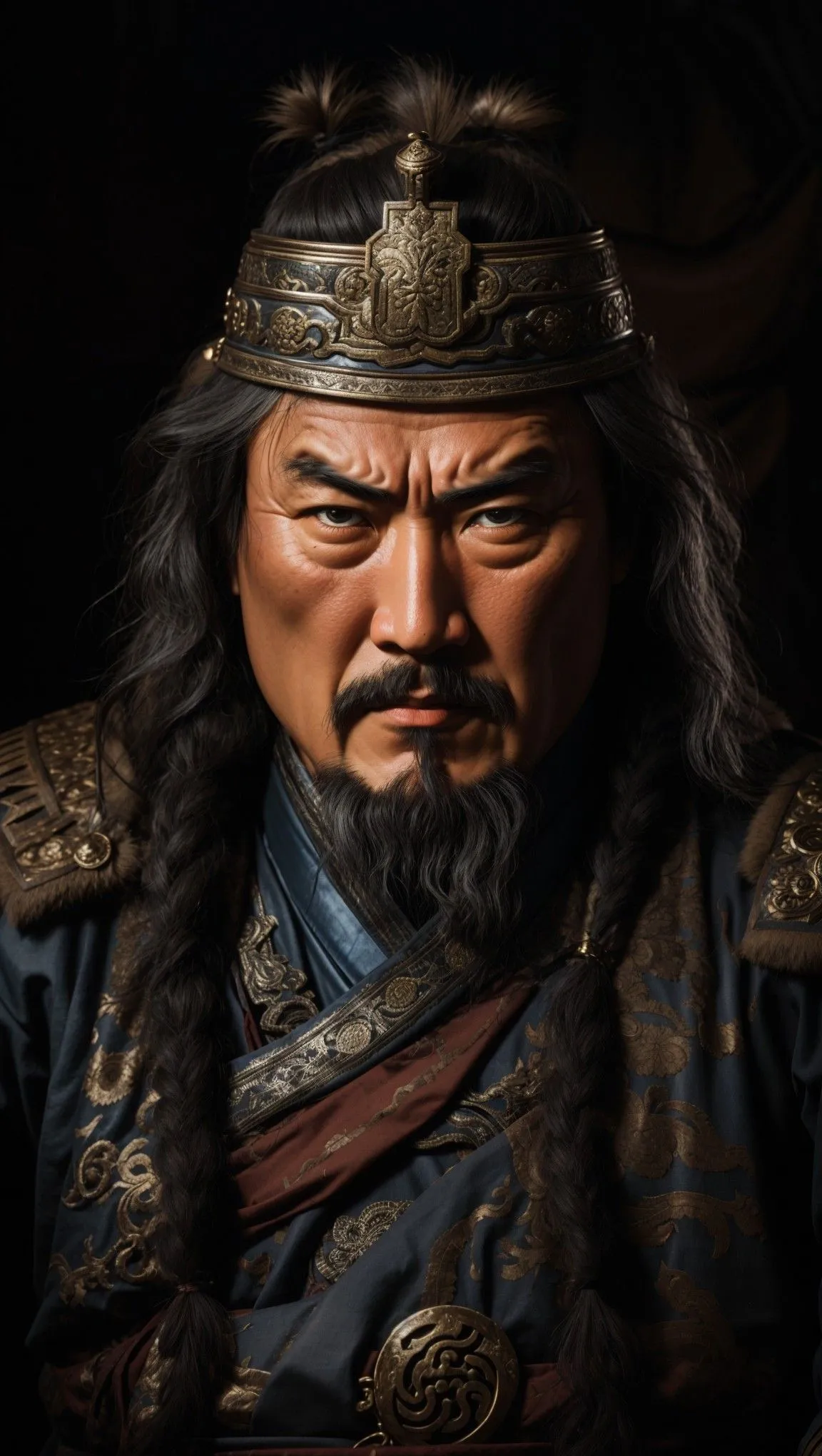 Photo: Genghis Khan, via i.pinimg.com
This created a peculiar form of loyalty — not emotional attachment, but rational dependence. Yelu Chucai served his Mongol masters faithfully not because he loved them, but because betraying them would mean his own destruction. The relationship was transactional, but that made it reliable.
The Insider's Curse
Local advisors carried the burden of local ambitions. They had relatives to protect, estates to expand, and traditional privileges to defend. Even their loyalty could become a liability if it extended to institutions or practices that conflicted with the ruler's interests.
When Roman Emperor Constantine needed advisors for his new Christian empire, he faced a dilemma. Traditional Roman senators understood governance but remained attached to pagan traditions. Christian bishops understood the new faith but lacked administrative experience. His solution was to elevate men like Hosius of Córdoba, a Spanish bishop who had no ties to Roman aristocratic families and no investment in traditional Roman religious practices.
Hosius could advise Constantine on Christian doctrine without the complications that would have accompanied similar advice from Roman clergy with local political connections. His foreign origin made him simultaneously more valuable and more vulnerable — the perfect combination for an imperial advisor.
The Technology of Trust
Foreign advisors served as a form of political technology, solving the eternal problem of delegation in autocratic systems. How does a ruler extend his power without empowering potential rivals?
The Abbasid Caliphate developed perhaps the most sophisticated version of this system with their reliance on mamluk soldiers and administrators. These were men captured or purchased as children from Central Asia, the Caucasus, and Eastern Europe, then trained in Islamic culture and military arts. By adulthood, they possessed all the skills necessary for high office but none of the local connections that might enable rebellion.
The mamluk system worked precisely because it was artificial. These men had no inherited status, no tribal affiliations, and no religious authority independent of the Caliph who had elevated them. Their power was entirely derivative, which made it safe for the Caliph to delegate.
The psychological appeal to rulers was obvious: foreign advisors could be trusted with sensitive tasks precisely because they could not be trusted with anything else. They were competent enough to be useful but isolated enough to remain controllable.
The Price of Alienation
Yet the very qualities that made foreign advisors valuable also made them dangerous in unexpected ways. Their lack of local connections meant they had no stake in the long-term stability of the societies they served. They could offer advice that was strategically sound but socially destructive because they would not bear the consequences.
Wang Anshi, the Song Dynasty reformer, exemplified this dynamic. As a scholar-official from a relatively humble background, Wang had fewer aristocratic connections than most court advisors. This independence allowed him to propose radical fiscal reforms that challenged entrenched interests. But his distance from local power structures also meant he underestimated the resistance his policies would generate.
The resulting upheaval nearly destroyed the Song Dynasty's fiscal system and contributed to its eventual collapse. Wang's reforms were technically sophisticated but politically naive — the product of someone who understood administration better than he understood society.
The Stranger's Advantage
Foreign advisors possessed one crucial advantage that no amount of local knowledge could replicate: they could see the forest instead of the trees. Their outsider perspective allowed them to identify patterns and possibilities that insiders missed.
Marco Polo's service to Kublai Khan illustrates this dynamic. Polo's value was not his administrative expertise — he had none — but his ability to observe Chinese society without the assumptions that shaped Chinese thinking. His reports to the Khan provided insights that native-born officials, embedded in their own cultural frameworks, could not offer.
 Photo: Kublai Khan, via images.deepai.org
This outsider's clarity came with its own limitations. Polo's observations were often superficial, colored by his own cultural biases, and disconnected from deeper social currents. But for a Mongol emperor trying to govern a Chinese population, superficial observations from a neutral source were often more valuable than deep insights from potentially biased local experts.
The Modern Echo
The pattern persists in contemporary organizations, though the dynamics have evolved. Multinational corporations routinely hire foreign executives to manage local operations, calculating that outsider status provides advantages that outweigh cultural disadvantages. Management consultants thrive partly because their temporary, external status allows them to recommend changes that internal employees could not suggest without damaging their careers.
The psychology remains unchanged: organizations trust outsiders with sensitive tasks because outsiders have limited ability to exploit that trust for independent gain.
The Eternal Calculation
The historical preference for foreign advisors reveals something unsettling about the nature of power: those who wield it have always assumed that competence and loyalty are inversely related. The more capable someone is, the more dangerous they become. The solution is to find advisors who are capable but constrained — skilled but vulnerable.
This calculation has proven remarkably durable across cultures and centuries because it addresses a real dilemma in human organization. How do you delegate authority without creating rivals? How do you benefit from expertise without empowering experts?
The answer, consistently, has been to hire strangers. Not because they are more trustworthy, but because their trustworthiness is irrelevant. They can be relied upon not because they are loyal, but because they have no choice.
The usefulness of strangers lies not in their virtue, but in their vulnerability. History's most powerful people understood this calculation instinctively, which is why they kept making it, generation after generation, despite its obvious risks.
Power, it seems, has always preferred the devil it didn't know.