The Ledger That Ruled the Land: How Record-Keepers Quietly Became the Most Powerful People in History
The history of power is usually told as a history of force — armies, thrones, declarations, conquests. This framing is not wrong, exactly, but it is systematically incomplete. Alongside every army that ever marched and every throne that was ever contested, there existed a parallel system of measurement, recording, and accounting that determined, with far greater precision than any battle, who actually had resources, who was entitled to extract them, and who would ultimately bear the cost of everything the empire required.
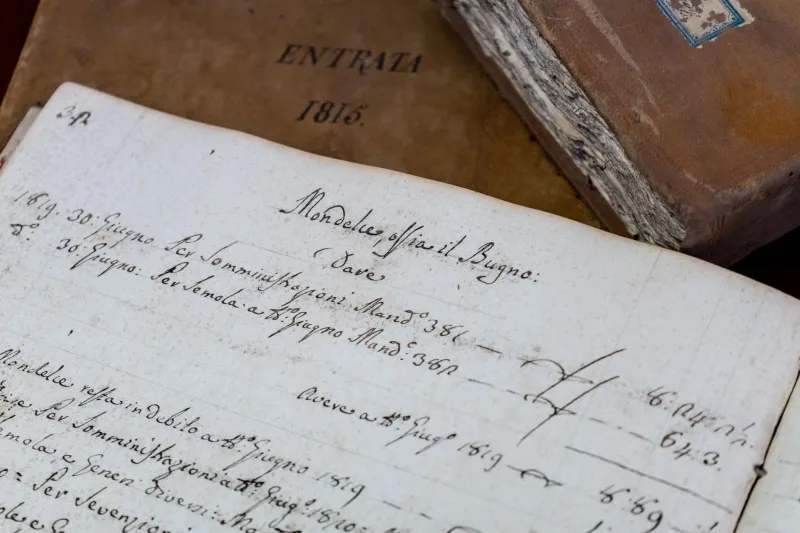
The people who built and maintained those systems were rarely the most visible figures in their societies. They were often, by design and temperament, invisible. But the ledger they kept — the assessment, the census, the tithe record, the tax roll — was in many respects more consequential than the crown it was designed to serve.
The Roman Fiscal Machine and the Geography of Extraction
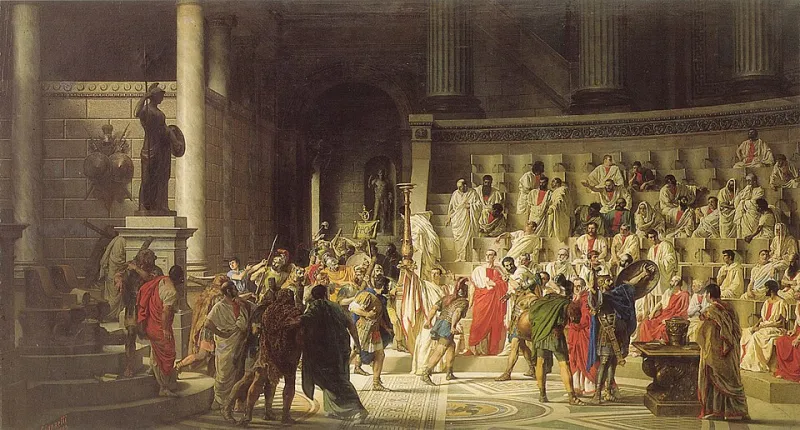
The Roman Empire at its administrative height was, among other things, one of the most sophisticated tax-collection operations the ancient world had produced. The census — conducted with remarkable regularity across a territory stretching from Scotland to Mesopotamia — was not merely a counting exercise. It was an instrument of resource allocation that determined, with considerable specificity, which provinces would be productive contributors to imperial revenues and which would be net recipients of imperial expenditure.
The practical effect of this system was that the census assessors — the officials who actually conducted surveys, recorded landholdings, counted livestock, and evaluated productive capacity — held enormous power over provincial fortunes. An assessment that undervalued a region's agricultural output reduced its tax liability. An assessment that overvalued it could, and frequently did, accelerate the process of peasant flight and land abandonment that would eventually hollow out entire provinces.
Roman administrators understood this clearly enough that the manipulation of census records became a significant form of political currency. Wealthy landowners who cultivated relationships with census officials could protect their estates from accurate assessment. Regions that lacked such connections were assessed at rates that reflected not their actual productivity but the administrative ambitions of officials seeking to demonstrate the vigor of their tax collection.
The empire did not simply tax its territories. It was continuously reshaped by the act of measuring them.
The Domesday Book as Power Technology
William the Conqueror's great survey of 1086 — the Domesday Book — is frequently described in terms of its ambition and its novelty. Both characterizations are accurate, but they tend to obscure what the survey actually was: a mechanism for establishing, with legal permanence, the terms on which England's resources would be extracted by its new Norman administration.
The genius of the project was not merely that it recorded what existed. It was that the act of recording created facts that had not previously existed in that form. A manor's value, as entered in the Domesday survey, became the basis for its fiscal obligations regardless of subsequent fluctuations in productivity. A lord's holdings, as recorded by the king's commissioners, became legally definitive in ways that oral tradition and local custom had never been.
The commissioners who conducted the survey — and the clerks who compiled and organized their findings — were not passive recorders of an existing reality. They were constructing a new one, a version of England's resources that would be legible to the Norman administrative apparatus and that would determine the distribution of obligation and privilege for generations.
The men who held the quill, in this instance, were doing something the men who held the sword could not: they were making the conquest permanent.
Medieval Tithe Systems and the Cartography of Obligation
The medieval Church's tithe system — the requirement that agricultural producers surrender one-tenth of their output to ecclesiastical authorities — was, in its administrative form, a remarkably sophisticated instrument of resource extraction. Its sophistication lay not in the principle, which was simple enough, but in the machinery of assessment and collection that developed around it over centuries.
Tithe assessors, whose records survive in considerable quantity in European ecclesiastical archives, were making determinations that extended well beyond the simple counting of sheaves. They were classifying land, adjudicating disputes about what categories of production were titheable, establishing precedents that would govern subsequent assessments, and — inevitably — making judgments that reflected the interests of the institutions they served.
Regions that were accurately assessed bore a heavier proportional burden than regions whose records, through accident or design, understated their productivity. Over generations, these discrepancies compounded. The cumulative effect of tithe records that systematically undervalued the output of well-connected estates while accurately capturing the production of smaller holdings was a gradual transfer of relative burden toward the less powerful and less connected.
This was not a conspiracy. It was an administrative system operating according to its internal logic, which happened to align the interests of its operators with the interests of those who could reward accurate — or inaccurate — assessment.
The Metric as Lever
Contemporary American institutions have not transcended this dynamic. They have, characteristically, given it new vocabulary.
The modern proliferation of performance metrics — in healthcare, education, municipal governance, corporate management — represents the most recent iteration of an ancient pattern. The measurement system designed to evaluate an institution's performance rapidly becomes the institution's primary operational reality. Administrators optimize for the metric rather than the outcome the metric was designed to approximate. Resources flow toward activities that are easily measured and away from activities that are important but difficult to quantify.
This phenomenon — sometimes called Goodhart's Law in contemporary management literature, after the British economist who articulated it in the 1970s — was observed and documented in practice long before it received a name. Roman provincial administrators understood that the census was the target, not the territory it described. Medieval tithe collectors understood that the record was the reality, not the harvest it was meant to represent.
The people who design and maintain measurement systems are making choices about what will be visible, what will be legible to power, and what will remain in the dark. Those choices determine, with greater precision than most political decisions, which activities are rewarded, which regions prosper, and which populations bear the costs of the system's operation.
The Invisible Architecture
The crown, the throne, the general's command — these are the images around which we organize our understanding of historical power. They are real, and their occupants made consequential decisions. But the administrative substrate beneath them — the census roll, the tithe record, the performance dashboard — was the medium through which those decisions were actually transmitted into the world.
Five thousand years of evidence suggests that the person who controls the measurement controls, in a very practical sense, the thing being measured. The auditor who determines how a province's resources are classified is making a political decision, whether or not it is experienced as one. The record-keeper who decides what counts as productive, what counts as compliant, what counts as present in the ledger — that person is exercising power of a kind that outlasts most of the rulers whose authority it was nominally designed to serve.
The ledger, in the end, is not a record of power. It is one of its primary instruments.