The Ninety-Nine Percent Who Left No Memoir: Recovering the Lives History Forgot to Record
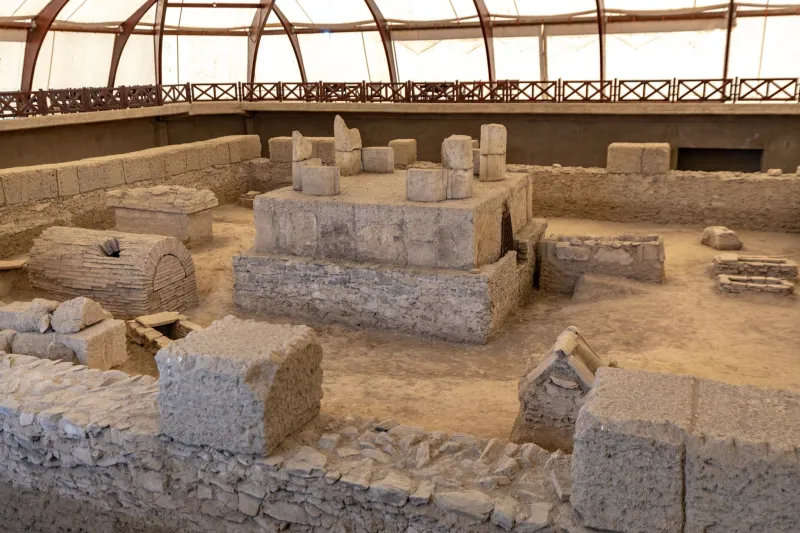
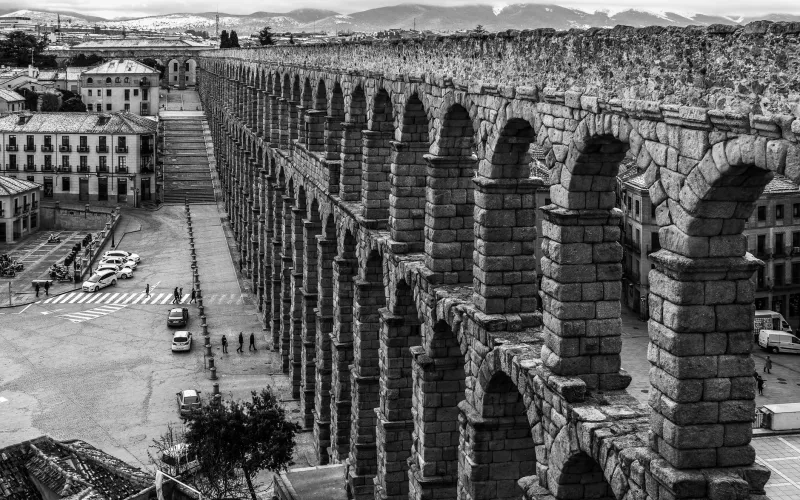
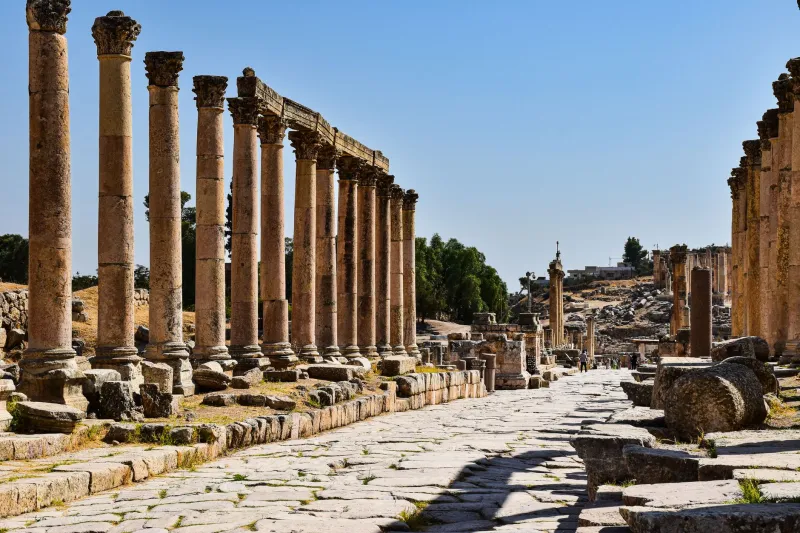
Every civilization that has ever produced a written record has produced roughly the same kind of written record: accounts of rulers, priests, generals, and the occasional wealthy merchant. The people who built the aqueducts, harvested the grain, wove the cloth, and carried the goods that made those civilizations function left almost nothing in writing — not because they lacked interior lives or political opinions, but because literacy was expensive and the powerful had little interest in preserving the perspectives of the powerless.
This is not merely a gap in the archive. It is a systematic distortion. And understanding what has been lost — and how scholars have begun to recover it — changes almost everything we think we know about how societies actually work.
What the Texts Were Never Designed to Capture
The surviving literature of ancient Rome is enormous by the standards of the ancient world. We have philosophy, history, legal commentary, poetry, letters, and administrative records in quantities that took centuries to fully catalogue. What we do not have, in any comparable volume, is an account of how an ordinary Roman laborer understood his relationship to the state that taxed him, the landlord who employed him, or the legal system that offered him limited recourse.
We know that Roman senators debated grain policy. We know almost nothing about how grain merchants in Ostia negotiated prices, managed debt, or responded to policy changes. We know that Augustus reformed the military. We know very little about what a legionary from rural Gaul made of the empire he was asked to defend on its eastern frontier.
The texts were not designed to capture any of this. They were designed to record, justify, and celebrate the decisions of people with the resources to commission writing and the interest in being remembered.
The Archaeology of the Overlooked
The corrective has come, slowly and incompletely, from sources that the literate elite did not control. Archaeology has been the most powerful of these. The excavations at Pompeii, preserved by the eruption of Vesuvius in 79 CE, produced something the Roman literary tradition never intended to provide: an unedited cross-section of a working city.
Pompeii had approximately eleven thousand residents at the time of the eruption. Its forum, temples, and elite houses have been studied exhaustively. But the city's roughly ninety bakeries, its street food stalls, its laundries, its small workshops producing pottery, metalwork, and textiles — these have yielded evidence of economic organization, labor arrangements, and daily life that the literary sources never mention. Graffiti scratched into plaster walls recorded election endorsements from guilds of muleteers and fishermen, personal insults, prices, and declarations of affection. The people who wrote them were not composing for posterity. They were communicating in the moment, and the volcano preserved what their own society had no interest in preserving.
The picture that emerges is of a city whose economic and social life was far more complex, contentious, and negotiated than the literary record suggests. The same dynamic appears wherever archaeology has been able to penetrate below the layer of elite construction.
Documentary Evidence from the Margins
Beyond the trowel, documentary historians have recovered voices from the edges of the archive. The Oxyrhynchus Papyri, excavated from an Egyptian rubbish heap beginning in 1896, contain hundreds of thousands of fragments of everyday writing: private letters, contracts, receipts, horoscopes, shopping lists, and petitions to local officials. They come from a provincial Egyptian town and span roughly a thousand years.
What they reveal is a society in which ordinary people — farmers, weavers, small traders, women managing household finances — were far more legally and commercially active than the formal record suggests. They sued one another. They negotiated debt. They wrote to family members about crop failures and personal disputes with a directness that the literary tradition, with its carefully constructed rhetorical poses, rarely achieves.
In medieval Europe, similar recoveries have come from manor court rolls, guild records, and church registers that were preserved not for their human interest but for their administrative utility. English historian Rodney Hilton spent decades mining these sources to reconstruct the economic lives of English peasants in the thirteenth and fourteenth centuries — people who appear in the literary record, if at all, as comic figures or anonymous laborers. What Hilton found was a class with its own legal strategies, its own forms of collective action, and its own sophisticated understanding of the systems that exploited them.
The Distortion and Its Consequences
The systematic absence of ordinary people from the historical record does more than leave gaps. It actively distorts the conclusions that can be drawn from what remains.
When the sources available to historians are almost entirely produced by elites, the history that results tends to treat elite decisions as the primary drivers of events. Wars begin because kings decide to fight them. Economies function because merchants and administrators manage them. Societies change because rulers and intellectuals introduce new ideas.
The recovery of ordinary life consistently complicates this picture. The Black Death of the fourteenth century is recorded in the chronicles of monasteries and the correspondence of nobles. It is also recorded in the sudden disappearance of tenants from manor rolls, in the wage demands of surviving laborers that contemporaneous elites found outrageous, and in the legal records of a peasantry that used the catastrophic reduction of the labor supply to renegotiate its relationship with the landowning class. The plague did not simply happen to passive recipients. It was responded to, exploited, and resisted by people who left almost no narrative account of their own experience but whose behavior shaped European society for generations.
The American historical tradition has its own version of this problem. For most of the nation's scholarly history, the experience of enslaved people was reconstructed almost entirely from sources produced by enslavers. The recovery of testimony, material culture, and the documentary traces left by free Black communities in the antebellum period has not merely added new chapters to an existing story. It has fundamentally altered the story's logic — revealing a degree of organized resistance, cultural preservation, and economic self-sufficiency that the dominant sources had every interest in concealing.
What Invisibility to Power Actually Means
The most consistent finding across all of these recoveries is that ordinary people have always understood their situation with considerably more clarity than the powerful found convenient. The Roman tenant farmer who calculated exactly how much of his yield the landlord's agent could legally claim was not confused about his circumstances. The medieval villager who grazed slightly more livestock on the common than the manor court permitted was not ignorant of the rule. The enslaved person who feigned incompetence to slow a task understood the economics of the situation precisely.
This behavior left traces that the formal record was not designed to capture. It was not dramatic. It did not produce chronicles or correspondence. But it was the mechanism by which the majority of human beings in every era navigated systems built without their consent and maintained without their agreement.
History that cannot see this behavior — because it is working only from sources produced by the people those systems served — is not simply incomplete. It is structurally incapable of explaining why the systems eventually changed, why they sometimes collapsed, and why the people living under them so rarely behaved as the people running them expected.
The longest human experiment was run on everyone. The record of it, for most of history, was kept by almost no one.