After the Throne: The Psychological Wreckage of Men Who Once Held Everything
The retirement party is a modern invention. The psychological problem it attempts to address is not.
For as long as human societies have organized themselves around hierarchies of power — which is to say, for as long as there have been human societies — the individuals who reached the apex of those hierarchies have faced a version of the same existential crisis: what happens to a person when the thing that defined them is taken away? The historical record on this question is extensive, consistent, and not particularly encouraging.
The Roman Data Set
The Roman Empire provides perhaps the richest archive of post-power pathology in the ancient world, largely because it produced so many men who held so much power and then, by one mechanism or another, didn't.
Diocletian's abdication in 305 CE is frequently cited as history's most successful voluntary retirement from supreme authority. He stepped down from the throne, withdrew to his palace at Split on the Dalmatian coast — the ruins of which remain one of the most extraordinary archaeological sites in Europe — and spent his remaining years, by most contemporary accounts, growing cabbages. When his former colleagues in the imperial college urged him to return to power as the empire fractured around him, he reportedly replied that if they could see the cabbages he had grown, they would not ask him to give them up. The line has the quality of a man who had genuinely made peace with something most men in his position could not.
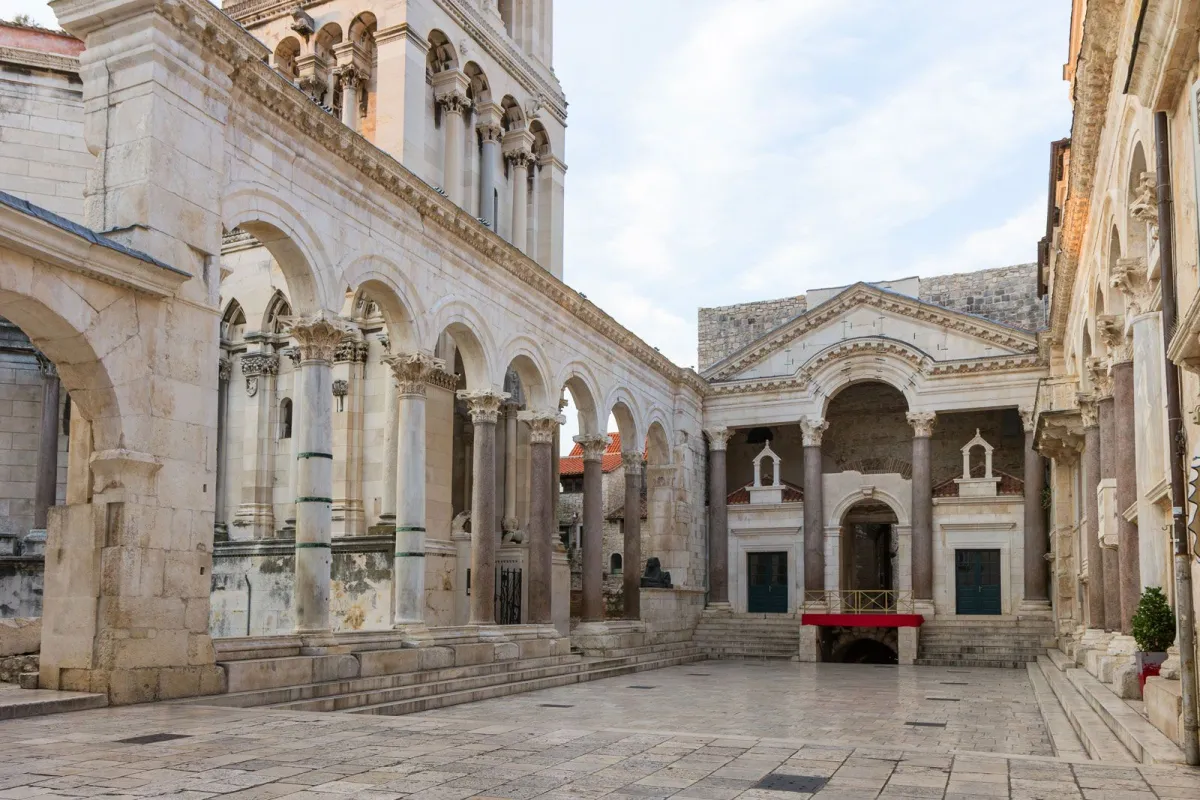 Photo: Palace at Split, via cdn.britannica.com
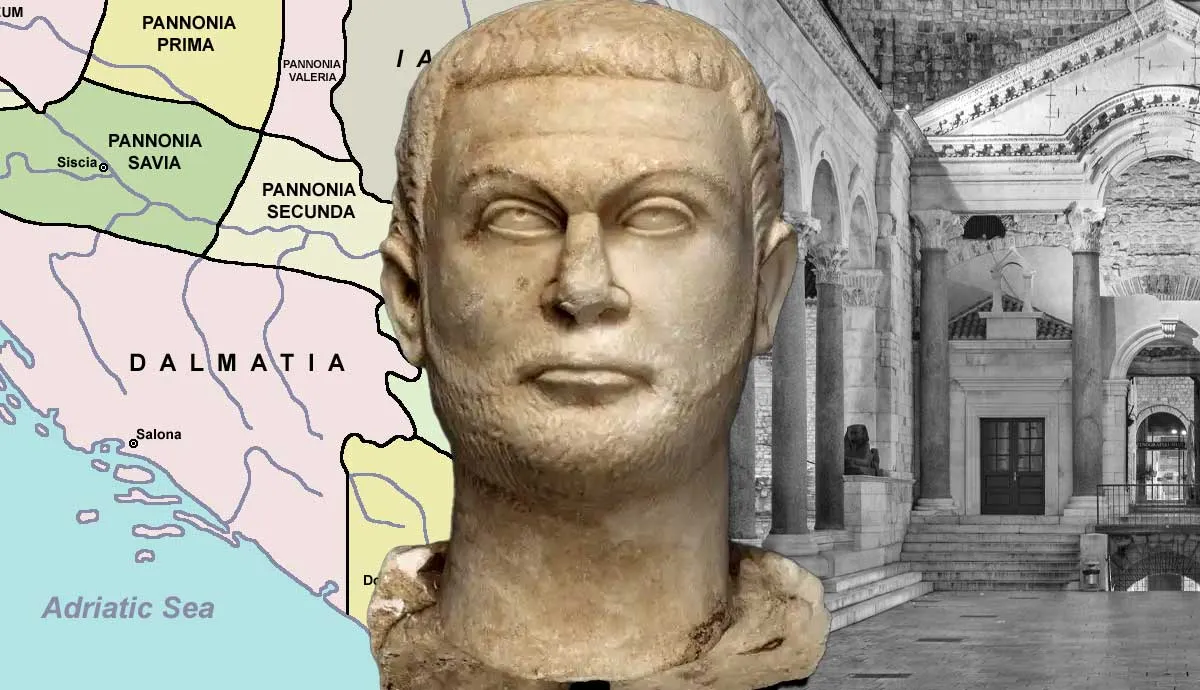 Photo: Diocletian, via cdn.thecollector.com
He was the exception. The archive is dominated by the rule.
Sulla, the Roman dictator who in 79 BCE voluntarily relinquished his near-absolute authority — an act that stunned his contemporaries — spent the remaining year of his life in such aggressive debauchery that ancient sources treated it less as retirement than as a slow public unraveling. The structure of his days had been command. Without command, the days had no structure.
Augustus, who ruled Rome for over four decades and was arguably the most consequential political figure in Western history, never resolved the succession question with any equanimity despite decades of attempting it. His final years were marked by a mounting anxiety about continuity that reads, in the historical sources, less like wise statecraft than like a man who could not tolerate the idea of a world that proceeded without his management of it.
The General's Dilemma
If emperors struggled, generals fared worse. The military mind — trained to find meaning in mission, in hierarchy, in the clarity of objective and opposition — has historically proven almost uniquely unsuited to the formlessness of private life.
The Duke of Wellington, after Waterloo, had another thirty-seven years to live. He spent a significant portion of them being miserable in politics, where the skills that had made him an extraordinary field commander made him a rigid and frequently ineffective statesman. He was not unintelligent. He was simply a man whose entire sense of self had been calibrated to a very specific set of conditions, and those conditions no longer existed.
The American Civil War produced a generation of men with an analogous problem at scale. Ulysses Grant's post-war career — the disastrous presidency, the failed business ventures, the near-bankruptcy — is often read as a story of a good soldier making poor choices in civilian life. It is more accurately read as a story of a man who had found, in the crucible of the war, the one environment in which his particular combination of qualities produced mastery, and who spent the remainder of his life searching for that environment without ever quite finding it again.
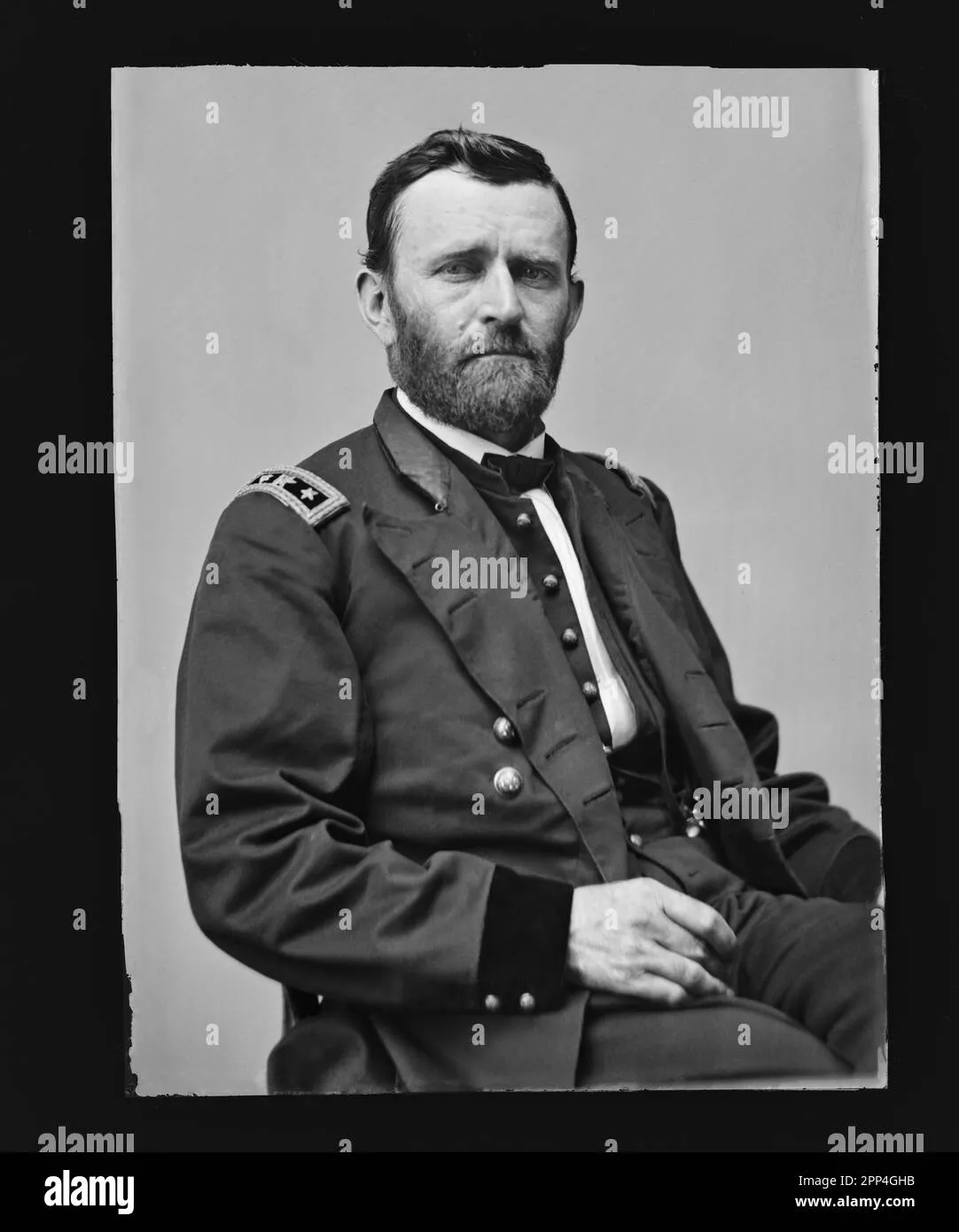 Photo: Ulysses Grant, via c8.alamy.com
He is not alone in this. He is representative of a pattern that the historical record reproduces across cultures, centuries, and military traditions with a fidelity that suggests something structural rather than personal.
The Meddler and the Exile
A recurring figure in the post-power literature is the former leader who, unable to accept the finality of his removal, continues to insert himself into the affairs he once managed. The meddler. The exile who writes letters. The abdicated king who receives delegations.
Napoleon on Elba was, by most accounts, ungovernable in his restlessness. He administered his small island with the intensity of a man governing a continent, issuing reforms, reorganizing institutions, and receiving visitors with the full ceremony of a court — because the alternative was to sit with the fact that he was no longer Napoleon in any sense that mattered to him. His escape and the subsequent Hundred Days were not primarily a military gamble. They were a psychological necessity.
The former Austro-Hungarian Emperor Karl I, exiled after the collapse of his empire in 1918, made two separate attempts to reclaim the Hungarian throne before dying in exile at thirty-four. The attempts were militarily hopeless and politically counterproductive. They were also, given everything we understand about how human identity operates, almost entirely predictable.
The Machinery of Self
The psychological literature on identity and status offers a framework for understanding what the historical record displays. Human beings construct their sense of self in large part through their roles — the functions they perform, the authority they exercise, the recognition they receive from others. When those roles are removed, the self does not automatically reconstitute around something new. It experiences something closer to structural collapse.
This is not a disorder. It is a feature of how identity is built. And it operates identically in the twenty-first century as it did in the third. The retired executive who cannot stop calling the office, the former athlete who defines every subsequent decade against the one when he played, the politician who can never quite leave the stage — these figures are not failures of individual character. They are predictable outputs of a human system that has not changed in any meaningful way since Sulla retired to his excesses and Diocletian to his cabbages.
The difference between those two outcomes was not institutional or circumstantial. It was a question of whether a man had built an identity that could survive the removal of the thing that had defined it — whether, in some fundamental sense, he had something else to be.
History's most powerful men have almost universally answered that question in the same direction. The throne was not something they had. It was something they were. And when it was gone, the question of who remained was one that most of them spent the rest of their lives failing to answer.