No Exit: The Institutional Panic of Civilizations That Made Someone Untouchable
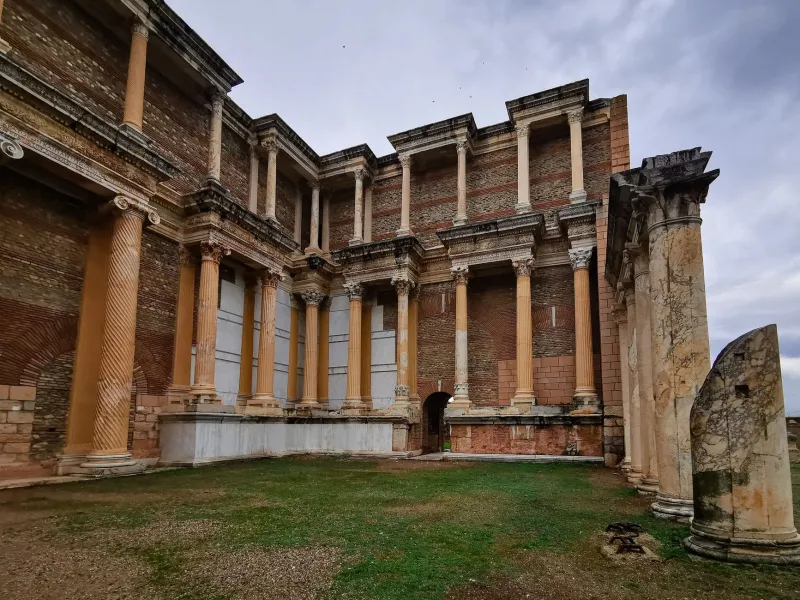
The Roman Senate was, by most measures, one of the more sophisticated governing bodies the ancient world produced. It had procedures, precedents, and centuries of accumulated institutional memory. It also, on at least several occasions, found itself staring across a chamber at a man it had empowered beyond its capacity to un-empower — and had absolutely no idea what to do next.
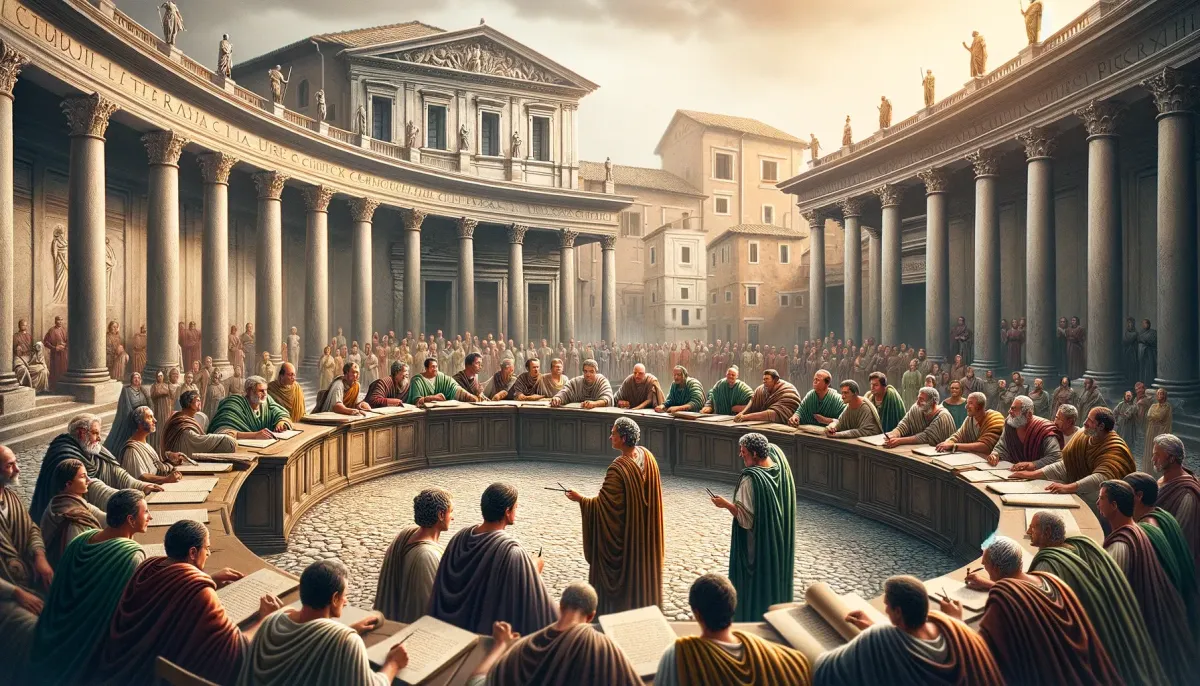 Photo: Roman Senate, via romanempiretimes.com
This is not a story about strongmen. It is a story about the people who made them, and the extraordinary, often catastrophic lengths those people went to when they realized what they had built.
Human psychology has not changed in five thousand years. The same cognitive architecture that makes us defer to dominant individuals in moments of crisis is the same architecture that leaves us paralyzed when that dominant individual stops being useful and starts being dangerous. The historical record is essentially a long catalog of civilizations learning this lesson, forgetting it, and learning it again.
The Roman Experiment in Managed Autocracy
The Roman dictatorship was, in theory, an elegant solution. When the Republic faced an emergency it could not handle through ordinary consular authority, the Senate appointed a dictator — a single man with near-absolute power — for a term not to exceed six months. The office came with a built-in expiration date. The assumption was that the man holding it would respect that date.
For roughly two centuries, this assumption held. Cincinnatus, the most famous of the early dictators, resigned after sixteen days, returned to his farm, and became the founding myth of the selfless public servant. The Romans were so impressed by this that they told the story for five hundred years, which should tell you something about how unusual they understood the behavior to be.
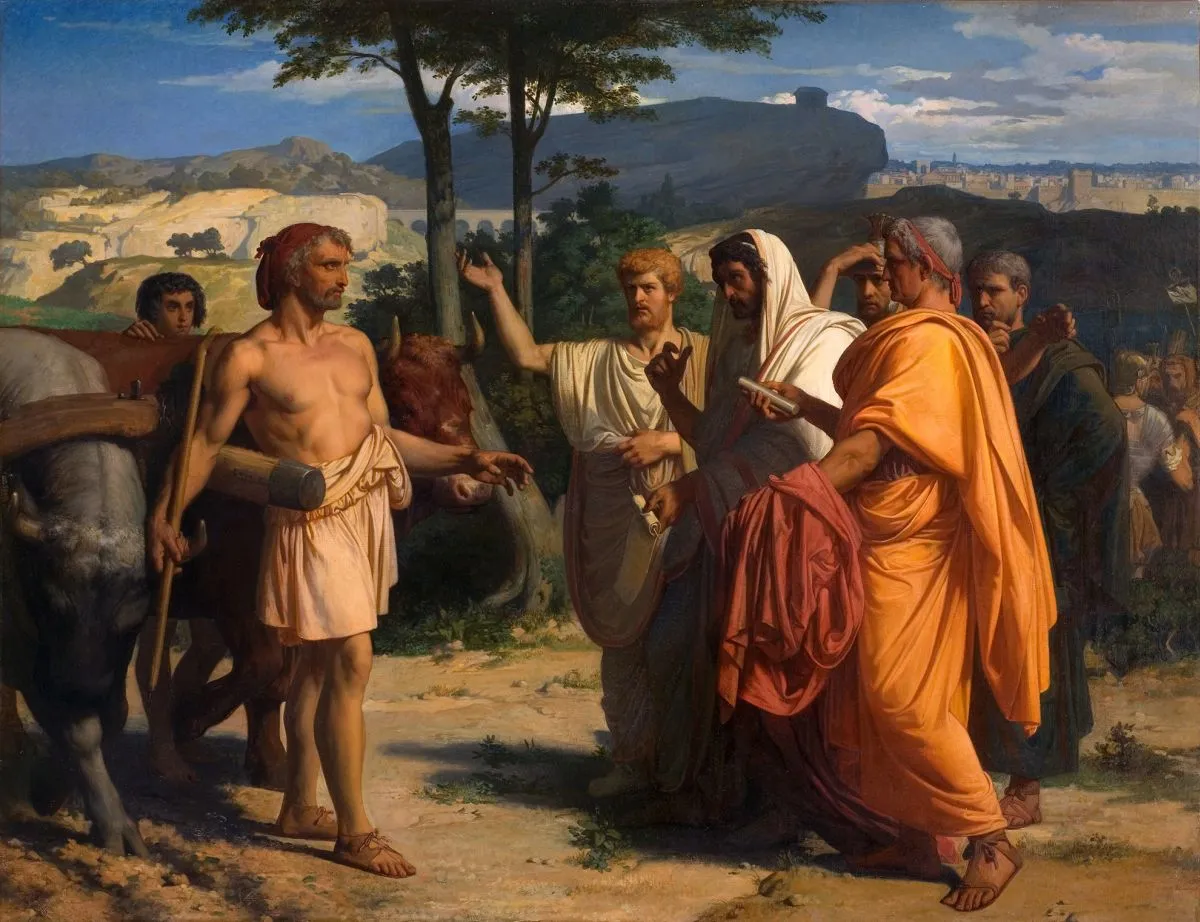 Photo: Cincinnatus, via imperiumromanum.pl
When Sulla marched on Rome in 88 B.C. and again in 83 B.C., the machinery of managed autocracy began to show its structural limits. Sulla was appointed dictator, reformed the constitution to his liking, and then — to the Senate's genuine astonishment — resigned and retired to Campania. He died of natural causes, which was considered something of a miracle. The Senate, having survived Sulla, immediately began empowering the next generation of generals who would destroy the Republic entirely. The lesson available was not taken.
By the time Julius Caesar held the dictatorship perpetuo — the dictatorship with no expiration date — the office's original safety mechanism had been simply deleted. The Senate's response was to delete Caesar instead, on the Ides of March, 44 B.C. The assassination solved the immediate problem and created every subsequent problem. The Republic never recovered.
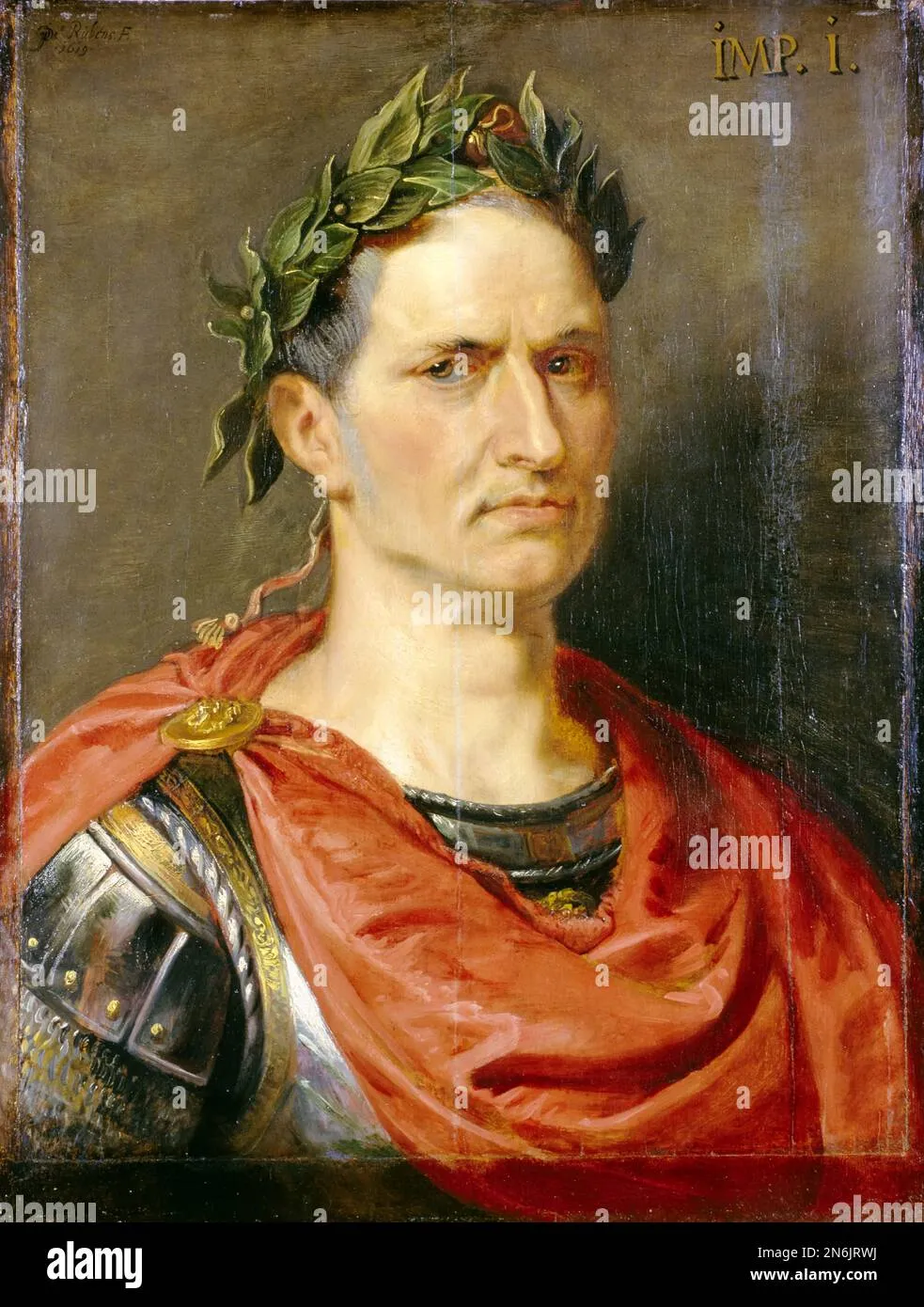 Photo: Julius Caesar, via c8.alamy.com
The Janissary Solution, and Its Consequences
The Ottoman Empire developed one of history's more sophisticated professional military forces in the Janissaries — slave soldiers recruited through the devshirme system, trained from childhood, and theoretically loyal to the sultan alone rather than to any family, tribe, or faction. For roughly two centuries, this worked more or less as designed.
Then the Janissaries became indispensable. Then they became hereditary. Then they became a political faction. Then they became the entity that decided which sultans lived and which sultans did not.
Between 1617 and 1623 alone, the Janissaries deposed three sultans. The institution created to give the Ottoman state a loyal, controllable military instrument had become the instrument by which the state itself was controlled. The sultans who followed spent considerable energy attempting to manage, bribe, or circumvent the corps — a project that consumed enormous political capital and produced, at best, temporary equilibrium.
Mahmud II finally abolished the Janissaries in 1826 in an event the Ottomans called the Auspicious Incident, which is the kind of name you give something when you are deeply relieved it is over. He did so by surrounding their barracks with artillery and killing several thousand of them. This is sometimes what institutional reform looks like when the institution has been left unmanaged for two hundred years.
Ceremonial Neutering as Policy
Not every civilization reached for violence when confronted with someone it could no longer dismiss. Some developed more refined approaches, which might be described as the elevation of irrelevance.
Byzantium was particularly skilled at this. An inconvenient general or a threatening court faction could be managed through the strategic deployment of honors — titles that sounded impressive and conferred nothing, appointments to distant provinces framed as marks of special trust, or in more serious cases, the monastery. Blinding, which sounds brutal to modern ears, was in Byzantine practice often a mercy: it disqualified a man from the throne without requiring his death, and a blinded former emperor in a monastery was, institutionally speaking, a solved problem.
The Japanese imperial court developed a parallel tradition. Powerful clans that could not be destroyed were instead given ceremonial proximity to the emperor — elaborate ritual roles that kept them occupied, honored, and carefully removed from actual governance. The shogunate itself was, in one reading, the ultimate expression of this logic: real power resided with the military government while the emperor retained divine legitimacy and no meaningful authority. The arrangement persisted, in various forms, for centuries.
The Design Flaw Is the Feature
What is striking, when you survey this record, is not that these systems failed. It is that they were adopted again and again by people who had access to the history of their predecessors' failures.
The Roman Senate knew what Sulla had done. The Ottoman sultans of the seventeenth century had the example of the sixteenth century available to them. The pattern is not one of ignorance. It is one of need. Civilizations concentrate power in individuals because the problems they face in the moment feel more urgent than the institutional risks they are creating for the future. The strongman is always a response to something real — a military threat, a political crisis, a moment of genuine emergency. The emergency passes. The strongman does not.
This is the recurring finding of five thousand years of human political organization: the same cognitive tendency that makes concentrated authority feel like a solution in a crisis makes it feel like an impossibility to reverse when the crisis ends. The people trying to manage the strongman are not stupid. They are human. They are working with the same psychological equipment that created the problem in the first place.
The historical record does not offer a clean solution to this. What it offers instead is a long inventory of the methods tried — exile, assassination, ceremonial demotion, artillery — and the observation that the civilizations that survived longest were generally the ones that built the exit mechanism before they needed it, not after.
Cincinnatus went back to his farm. The Republic survived another four centuries. This is, in the long history of this particular problem, about as good as it gets.