Educated Captives: How History's Greatest Powers Turned Enemies Into Allies Through Strategic Hospitality

The Gilded Cage Strategy
When the Roman general Scipio Africanus captured the nephew of Hannibal during the Second Punic War, he did something that would seem counterintuitive to modern military strategists: he educated the boy. Not as punishment or mere political theater, but as a deliberate investment in future diplomatic relations. The young Carthaginian was given Roman tutors, exposed to Roman philosophy, and treated with the respect due to nobility. When he eventually returned to Carthage years later, he carried with him not just memories of captivity, but genuine admiration for Roman civilization.
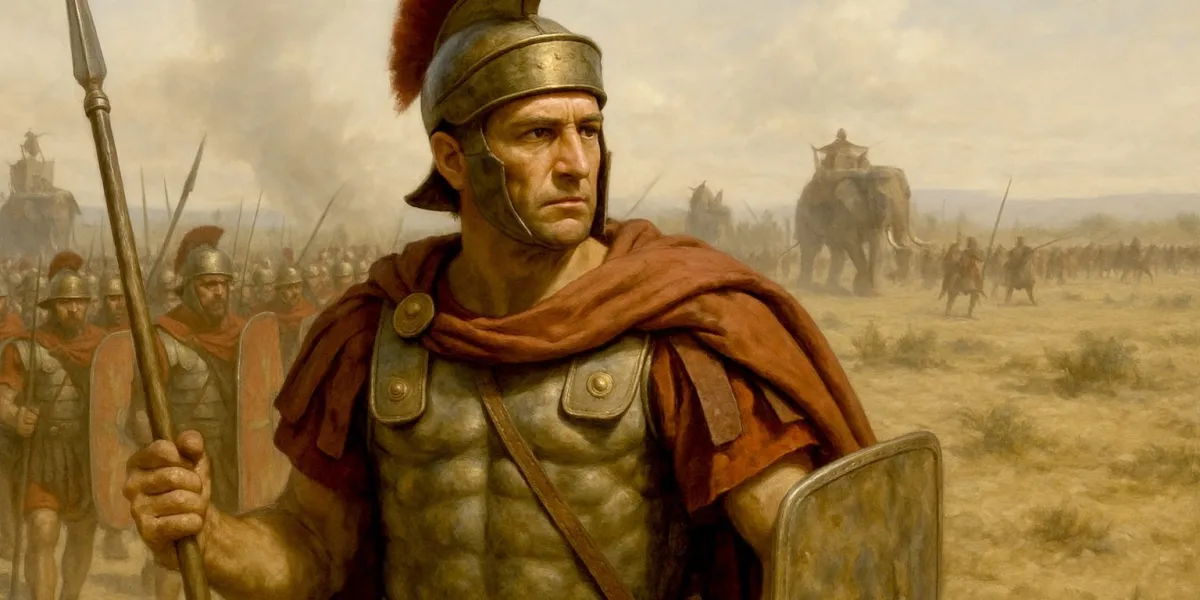 Photo: Scipio Africanus, via sevenswords.uk
This wasn't an isolated act of magnanimity. It was standard operating procedure for empires that understood a fundamental truth about human psychology: people defend what they've been taught to value, and they value what they've been taught to understand.
The Persian Model of Enlightened Detention
The Persian Empire perfected this approach centuries before Rome adopted it. When Cyrus the Great conquered Babylon in 539 BCE, he didn't simply install Persian governors and demand tribute. Instead, he took the sons of local nobility back to Persepolis, where they lived in luxury while receiving Persian education alongside Persian princes. These young men learned Persian customs, language, and administrative methods. More importantly, they experienced Persian power not as oppression, but as opportunity.
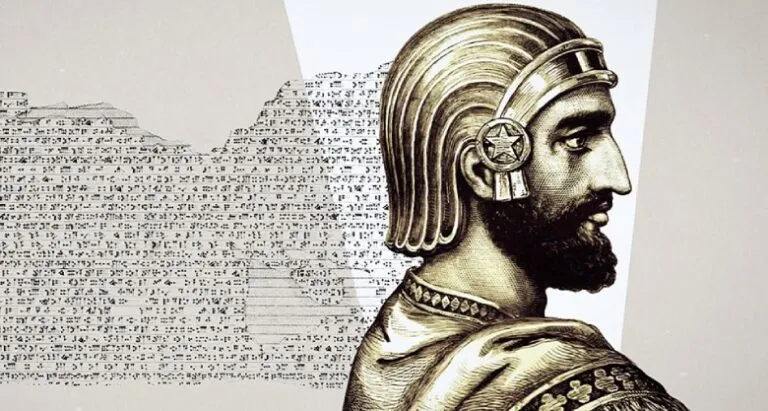 Photo: Cyrus the Great, via surfiran.com
The psychological mechanism at work here is what modern researchers call the "Stockholm syndrome," but that clinical term fails to capture the sophisticated nature of what these empires accomplished. They weren't simply waiting for their captives to develop emotional attachments to their captors. They were deliberately constructing new identities for these individuals—identities that could bridge the gap between conquered and conqueror.
When these educated hostages returned to their homelands, they brought with them more than just Persian language skills. They carried Persian solutions to local problems, Persian perspectives on governance, and Persian definitions of civilization itself. They became voluntary advocates for Persian interests because they had genuinely come to believe that Persian interests aligned with human progress.
The Ottoman Academy of Influence
The Ottoman Empire took this strategy to its logical extreme with the devshirme system. Beginning in the 14th century, the Ottomans systematically recruited Christian boys from conquered territories, converted them to Islam, and educated them in Ottoman schools. The most promising graduates entered the Janissary corps or the palace administration, where they could rise to the highest levels of government.
This wasn't cultural destruction—it was cultural alchemy. These boys retained memories of their origins while acquiring new loyalties. When they returned to govern their native regions as Ottoman administrators, they brought legitimacy that no foreign occupier could manufacture. They spoke the local language, understood local customs, but governed according to Ottoman principles.
The genius of this system lay in its recognition of a basic psychological truth: humans are remarkably adaptable, and adaptation often leads to advocacy. Give someone a stake in a system's success, and they will find reasons to defend that system even against their own people.
The American Experiment in Reverse
The United States has inadvertently run the opposite experiment throughout its history. From Native American boarding schools to Cold War exchange programs, America has repeatedly demonstrated both the power and the limitations of educational conversion. The boarding school system, which forcibly separated Native American children from their families and cultures, created generations of individuals caught between worlds—neither fully accepted by white society nor able to return to their traditional communities.
Conversely, programs like the Fulbright exchanges have created thousands of foreign advocates for American values, not through coercion, but through positive exposure to American institutions and ideas. These modern examples illustrate the same psychological principles that ancient empires exploited: immersive cultural education creates lasting changes in perspective and loyalty.
The Psychology of Voluntary Conversion
What made the ancient hostage-diplomat system so effective wasn't the quality of the education or the luxury of the accommodations—it was the voluntary nature of the final conversion. Unlike prisoners who might fake compliance to survive, these educated captives genuinely believed in what they had learned because they had been given the tools to understand it.
Modern psychological research confirms what these ancient empires intuited: people who feel they have chosen their beliefs, even when that choice occurred under constraint, defend those beliefs more vigorously than people who simply inherit them. The hostage-diplomats didn't just mouth Persian or Roman talking points when they returned home—they had internalized Persian and Roman ways of thinking about problems.
Lessons for the Modern World
The success of ancient hostage-diplomacy reveals uncomfortable truths about human nature that remain relevant today. We like to believe that education is neutral, that exposure to ideas doesn't constitute manipulation, and that people can objectively evaluate competing worldviews. But the historical record suggests otherwise.
Every time a foreign student studies at an American university, every time an American executive does business in China, every time cultural exchange occurs under conditions of unequal power, the same psychological mechanisms are at work. The question isn't whether influence is happening—it's whether we're conscious of it.
The ancient empires that mastered hostage-diplomacy understood something that modern democracies often forget: the most durable form of power isn't the ability to compel obedience, but the ability to shape what people want to obey. They turned enemies into allies not by changing their circumstances, but by changing their minds. And they changed minds not through propaganda or coercion, but through the simple expedient of making foreign ideas feel like personal discoveries.
In a world where soft power often matters more than military might, the lessons of ancient hostage-diplomacy deserve serious study. The empires that lasted longest weren't necessarily the ones with the strongest armies—they were the ones that could make their enemies want to become them.