The Educated Prince's Trap: When Knowing Too Much Made a Ruler Useless
The Educated Prince's Trap: When Knowing Too Much Made a Ruler Useless
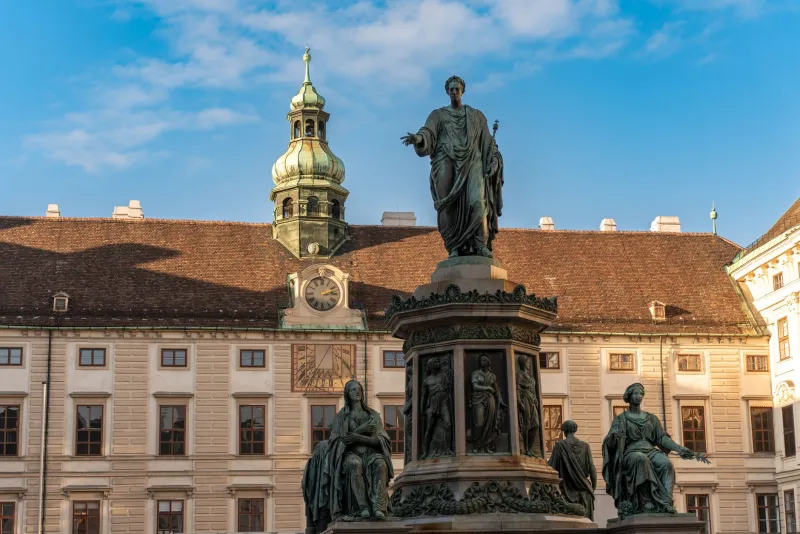
In the final years of the Habsburg dynasty, Crown Prince Rudolf of Austria-Hungary was, by nearly every account, the most intellectually accomplished member of his family in generations. He had studied natural history seriously enough to co-author a legitimate ornithological survey. He read widely in political philosophy. He understood, with unusual clarity for a man in his position, that the Austro-Hungarian empire was a creaking anachronism held together by ceremony and inertia, that its multinational structure was unsustainable under the pressure of rising nationalism, and that the reforms required to save it would be violently opposed by the very court whose approval he needed to implement them.
He was right about all of it. He could do nothing about any of it. In 1889, at thirty years old, he died at Mayerling under circumstances that remain disputed, and the empire he had diagnosed so accurately collapsed, more or less as he had predicted, within three decades.
Rudolf's tragedy was not unique. It was, in fact, one of the most reliably recurring patterns in the entire history of dynastic governance.
The Curriculum That Created the Problem
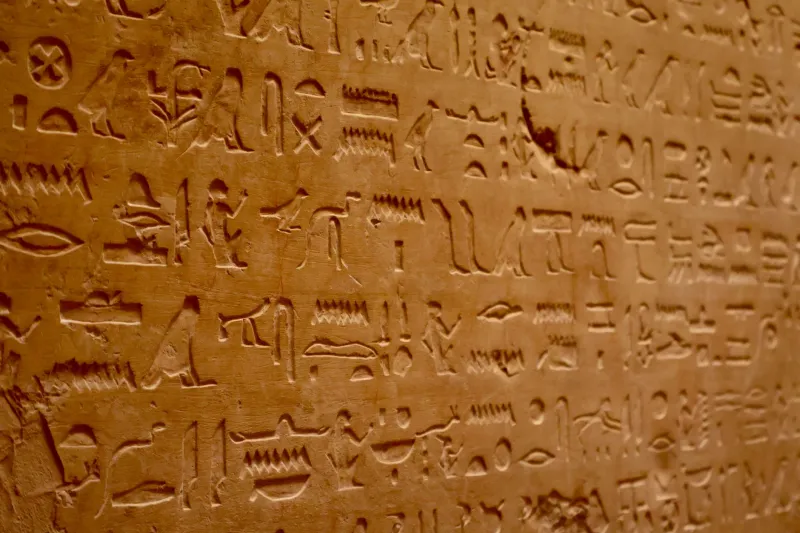
The education of heirs apparent was, across most of recorded history, an extraordinarily serious enterprise. The Ptolemaic court in Alexandria surrounded its princes with the finest scholars the ancient world had produced. Mughal princes studied mathematics, astronomy, theology, and poetry. The Habsburgs themselves had, over centuries, developed an elaborate program of preparation for rule that included history, languages, military theory, and statecraft.
The intention was obvious and reasonable: a ruler who understood the world would govern it more wisely than one who did not. The result, with uncomfortable frequency, was something quite different.
The problem is not that education failed to transmit knowledge. It succeeded. The problem is that the knowledge it transmitted was, in a specific and decisive way, incompatible with the psychological requirements of wielding power in a dynastic system.
Understanding the Machine You Cannot Fix
Power in a hereditary system is not primarily about making good decisions. It is about making decisions at all — with sufficient speed, sufficient confidence, and sufficient indifference to the human cost of being wrong. The ruler who understands too clearly what is at stake, who has absorbed too many historical examples of how similar decisions ended, who can see with uncomfortable precision the range of ways any given action might fail, is not better equipped to act. He is paralyzed.
This is not a hypothetical psychological mechanism. It is documented across courts separated by centuries and continents. The Emperor Severus Alexander, who ruled Rome in the third century CE, was by ancient accounts a conscientious and learned young man who genuinely attempted to govern by principle. His soldiers murdered him. His successor, Maximinus Thrax, was barely literate, had come from the lowest social origins, and ruled with uncomplicated brutality. He lasted longer.
The Ptolemaic heir Ptolemy VI Philometor was educated in the full tradition of Hellenistic scholarship and spent much of his reign attempting to navigate the competing pressures of Rome, his own court, and his brother with a sophistication that his situation simply did not reward. Courts do not punish stupidity as reliably as they punish visible hesitation.
The Last Habsburg Lesson
The Habsburg case is particularly instructive because it produced, across its long history, several versions of the educated heir, and the pattern is remarkably consistent. Joseph II, who ruled in the late eighteenth century, was perhaps the most intellectually serious emperor the dynasty ever produced. He had studied Enlightenment philosophy with genuine engagement. He understood serfdom as a moral and economic problem. He attempted reforms of a scope and ambition that no Austrian emperor before him had contemplated.
He was defeated, thoroughly and humiliatingly, by the institutional resistance of the very structures he sought to reform. On his deathbed, he dictated a sardonic epitaph for himself: "Here lies Joseph II, who failed in all he undertook."
This is the educated prince's particular form of suffering. He failed not because he was wrong, but because being right — demonstrably, historically, philosophically right — confers no political leverage whatsoever against an entrenched system that benefits from the status quo.
What the Pattern Tells Us About Power
For American readers, who tend to regard education as an uncomplicated good and intellectual preparation as straightforwardly useful, the educated prince's trap offers a genuinely uncomfortable lesson. The historical record does not suggest that ignorance is an advantage in governance — rulers who understood nothing of their situation tended to produce catastrophes of a different kind. But it does suggest that a specific type of knowledge — the kind that produces nuance, that reveals the complexity of situations, that illuminates the range of possible negative outcomes — is actively dangerous to the psychological equipment required for decisive action.
The most effective rulers in the historical record tended to possess a selective education: enough knowledge to avoid obvious errors, not so much that every decision became a philosophical problem. Augustus Caesar was well-read but not scholarly. Frederick the Great of Prussia was genuinely intellectual but capable of setting his intellectualism aside when the military situation required brutality. The gap between understanding and action, for them, was manageable.
For Rudolf of Austria-Hungary, for Joseph II, for Ptolemy VI, the gap was not manageable. They saw too clearly. They understood too well. And the courts they inhabited had no mechanism — had never had a mechanism, across any dynasty in any era — for converting sophisticated historical understanding into political will.
History is the record of everything that has ever happened to human beings. The educated prince read it carefully. And the reading, in the end, was what destroyed him.