Signed in Bad Faith: The Long History of Treaties Nobody Meant to Honor
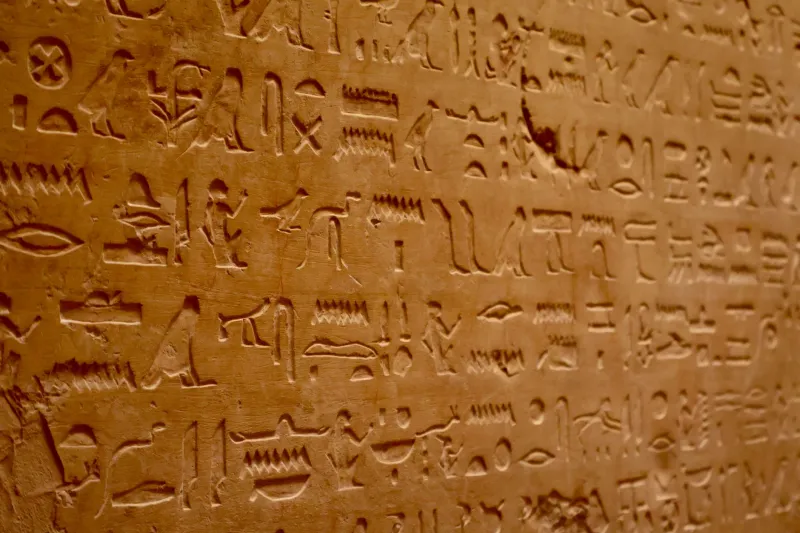
Somewhere in the Istanbul Archaeological Museum, there is a copy of what scholars sometimes call the world's oldest surviving peace treaty. Hammered into silver tablets around 1259 BCE, the agreement between Ramesses II of Egypt and Hattusili III of the Hittites was celebrated by both courts as a triumph of statesmanship. Messengers carried it across hundreds of miles of difficult terrain. Scribes translated it into multiple languages. Both monarchs swore oaths before their respective pantheons.
Neither side had any serious intention of keeping it.
The Hittite empire was already contracting under pressure from the Sea Peoples and internal instability. Egypt was overextended. The treaty was not a resolution — it was a mutual agreement to stop pretending that either power could destroy the other. What both courts actually needed was the performance of settlement, the theater of finality, the document that would allow each king to tell his own people that he had won.
This is not a cynical footnote in diplomatic history. It is, in fact, the central story.
The Document as Political Necessity
Human beings have a deep and apparently irresistible need to formalize what they have agreed to, even — and perhaps especially — when they have agreed to nothing. The ritual of treaty-making serves functions entirely separate from the content of the treaty itself. It creates a public record that can be cited. It produces a moment of apparent closure that allows both sides to demobilize their populations from a war footing. It gives leaders something to display.
The psychology at work here is not simple dishonesty. Both the Hittite and Egyptian courts understood the same thing: that the agreement would hold precisely as long as neither party found it more advantageous to break it. This is not cynicism — it is a remarkably clear-eyed understanding of how interstate relations actually function. The document was not a promise. It was a statement of current conditions, dressed in the language of eternal obligation.
Three thousand years later, the Peace of Westphalia in 1648 produced the same dynamic at a larger scale. The exhausted powers of the Thirty Years' War signed agreements that enshrined the sovereignty of states and the principle of non-interference in each other's religious affairs. Within a generation, Louis XIV of France was doing precisely what Westphalia had forbidden. The document had served its purpose: it ended the immediate killing. What came after was, as always, a matter of circumstance.
Why Both Sides Need the Lie
What makes ritualized bad faith genuinely interesting — and genuinely revealing about human psychology — is that it requires the active cooperation of both parties. A treaty signed in bad faith by only one side is simple deception. A treaty signed in bad faith by both sides, with both sides aware of the other's bad faith, is something more complicated and more instructive.
It suggests that the performance of agreement has independent social value. Populations need to believe that their leaders have achieved something. Courts need to demonstrate that diplomacy can work. Religious institutions need the oaths to mean something, even when the oathtakers privately regard them as contingent. The document is not primarily a communication between the signing parties — it is a communication to everyone watching.
The Romans understood this with particular clarity. Roman treaty language was extraordinarily elaborate, hedged with conditions and contingencies and carefully defined terms, precisely because Roman jurists knew that the conditions and contingencies and terms would be argued over the moment one side found them inconvenient. The elaborate legal architecture was not designed to prevent bad faith. It was designed to manage the aftermath of it — to provide a framework for the next negotiation, after the current agreement had collapsed.
The American Inheritance
American readers will find this pattern closer to home than they might prefer. The treaty history between the United States government and the various Indigenous nations of North America represents perhaps the most systematically documented case of agreements signed with no intention of long-term compliance in the historical record. Hundreds of treaties, negotiated with full ceremonial weight, were broken with such regularity that the pattern can only be described as institutional rather than incidental.
What is historically significant is not the bad faith itself — that is, sadly, unremarkable — but the persistence of the ritual. The United States continued negotiating and signing treaties long after both parties understood that the documents would be honored only as long as the balance of power made honoring them convenient. The form was maintained even as the substance evaporated. This is the Hittite-Egyptian dynamic, replicated on a continental scale, eighteen centuries later.
What the Ritual Reveals
The most instructive question is not why leaders sign agreements they do not intend to keep — the strategic incentives for that are obvious enough. The instructive question is why the ritual of signing persists across every culture and every era, even when its limitations are universally understood.
The answer, visible across five thousand years of diplomatic history, is that human beings require the performance of commitment even when they cannot sustain the commitment itself. The ritual is not a lie appended to a negotiation. It is the negotiation's primary product. What both sides are actually agreeing to, when they press seals into wax or exchange signed copies across a conference table, is a temporary shared fiction — the fiction that the current arrangement is stable, that the violence has ended, that the future is settled.
That fiction is not worthless. It buys time. It creates breathing room. It allows populations to exhale. The Hittite-Egyptian treaty held, more or less, for the remaining decades of both empires' existence. The Peace of Westphalia produced a framework that European diplomats argued about and around for more than a century, which is its own form of durability.
The document was always theater. But theater, performed with sufficient conviction, has always been capable of changing the world.