Loyalty Under the Magnifying Glass: How Ancient Empires Screened the People Who Ran Them

Loyalty Under the Magnifying Glass: How Ancient Empires Screamed the People Who Ran Them
There is a temptation, when reading about ancient empires, to imagine their administrative machinery as crude and improvised — powerful men making gut decisions about who to trust, guided by little more than instinct and flattery. The historical record suggests something considerably more sophisticated. From the river valleys of Mesopotamia to the corridors of the Sublime Porte, the question of how to vet the people you depended upon was treated as a matter of institutional life and death. It was, in the most literal sense, a survival skill.
The methods varied. The failures were remarkably consistent.
The Roman Calculus of Trustworthiness
The Roman Republic developed what may be the ancient world's most structured approach to evaluating men before entrusting them with power. The cursus honorum — the sequence of public offices a Roman aristocrat was expected to hold before ascending to senior magistracies — was not merely a career ladder. It was a prolonged, public audition. Each office offered the Senate an opportunity to observe a man's conduct under incrementally greater pressure, and the Senate watched closely.
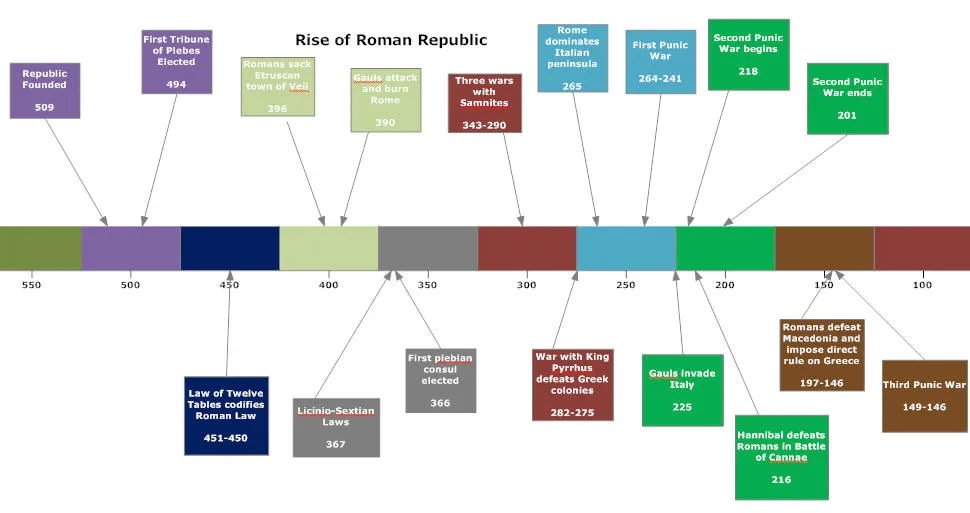 Photo: Roman Republic, via sparta11.weebly.com
Beyond formal progression, Romans relied on the testimonium — essentially a character reference — and on the concept of fides, a word that meant trustworthiness, reliability, and faithfulness simultaneously. A man's fides was assessed through his network of obligations and relationships. Who vouched for him? Whom had he served? Whom had he honored when it was inconvenient to do so? These were not abstract questions. They were the practical architecture of a system that needed to place men thousands of miles from Rome and trust that they would behave accordingly.
The system worked well enough to build the largest empire the Western world has ever seen. It failed, predictably, when the social fabric that gave fides its meaning began to fray. By the late Republic, the network of mutual obligation had been corroded by money, by the sheer scale of empire, and by the ambitions of men like Sulla, Caesar, and eventually Augustus — all of whom had passed through the cursus honorum impeccably before deciding the rules no longer applied to them.
The Ottoman Experiment in Human Engineering
The Ottoman Empire approached the problem from a different angle entirely. The devshirme system — the periodic conscription of Christian boys from Balkan and Anatolian villages for training as imperial servants and soldiers — was, among other things, one of history's most ambitious vetting programs. Boys were selected not only for physical capability but for apparent intelligence, character, and adaptability. They were then subjected to years of education and observation before any significant responsibility was assigned.
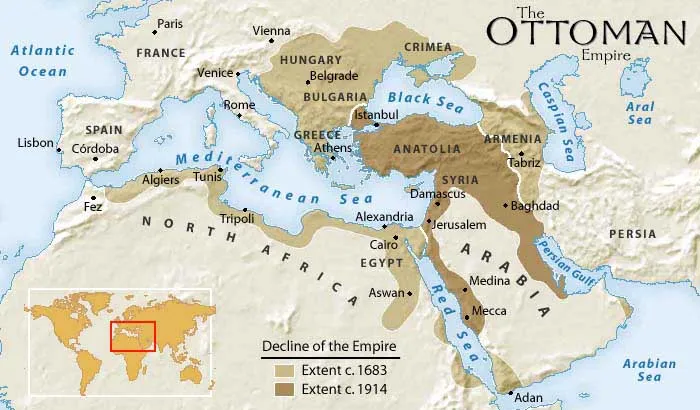 Photo: Ottoman Empire, via hblg-apwh.weebly.com
What made the Ottoman approach distinctive was its deliberate severing of prior loyalties. A recruit who had no family connections to the existing power structure, no regional patron to serve, and no inherited obligations was, in theory, wholly loyal to the sultan. The system encoded a striking psychological insight: the most dangerous quality in a powerful subordinate is not incompetence but divided loyalty. Incompetence can be managed. A man who owes his position entirely to you is predictable. A man who owes debts elsewhere is not.
The scrutiny extended across generations. Families of palace recruits were investigated for signs of prior disloyalty, religious heterodoxy, or criminal conduct. The Ottomans were not simply hiring individuals — they were assessing lineages, betting that character transmitted across blood in ways that a single interview could not fully reveal.
The system's collapse followed a familiar arc. By the seventeenth century, the devshirme had been corrupted by exactly the forces it was designed to exclude: family connections, bribery, and the infiltration of Ottoman-born Muslims who understood that palace positions were the empire's most reliable path to wealth. The vetting mechanism had been gamed, and the empire's administrative coherence declined in rough proportion.
The Predictable Failure Mode
Across cultures and centuries, the breakdown of institutional vetting follows a recognizable pattern. The mechanism is designed to screen for loyalty and competence. It succeeds well enough to generate stability, which generates prosperity, which generates the very incentives that make the mechanism worth corrupting. Men with resources and connections invest those resources and connections in bypassing the screen. The screen, designed for a simpler world, is not updated quickly enough.
The Tang Dynasty's examination system — the most meritocratic vetting apparatus the medieval world produced — was progressively hollowed out by wealthy families who could afford the tutors, the study time, and eventually the examiners themselves. The Venetian Republic's elaborate balloting procedures for senior offices, designed to prevent any single family from capturing the state, were gradually circumvented by the same patrician clans the procedures were meant to constrain.
 Photo: Tang Dynasty, via worldhistoryedu.com
The failure mode is not a mystery. It is the predictable consequence of placing human beings — ambitious, social, self-interested human beings — inside any system of assessment. The assessors are themselves subject to the same psychology as the assessed.
What the Ruins Tell Us
Modern Americans encounter this problem through institutions that are rarely described in historical terms but are engaged in precisely the same project: background checks, security clearances, professional licensing boards, congressional confirmation hearings. The mechanics are different. The underlying challenge is identical.
The question every vetting system must answer is not whether it can identify the obviously disqualified. That is the easy part. The genuine difficulty is detecting the person who has learned to perform trustworthiness without possessing it — who has, in Roman terms, the appearance of fides without its substance. Ancient empires devoted enormous intellectual and institutional energy to this problem. Their best solutions worked for a generation or two before being defeated by the same human ingenuity they were designed to constrain.
That is not an argument for cynicism about vetting systems. It is an argument for realism about what they can accomplish and how long they can accomplish it. The Ottoman palace's three-generation scrutiny was not paranoid excess. It was a hard-won recognition that trust, at the scale of empire, requires more evidence than a single interview can supply.
History's most durable powers understood something that modern institutions periodically rediscover: the cost of a bad appointment is almost always higher than the cost of a rigorous process. The empires that forgot this lesson did not usually get a second chance to remember it.