Somebody Has to Take the Fall: The Ancient Architecture of Blame Displacement

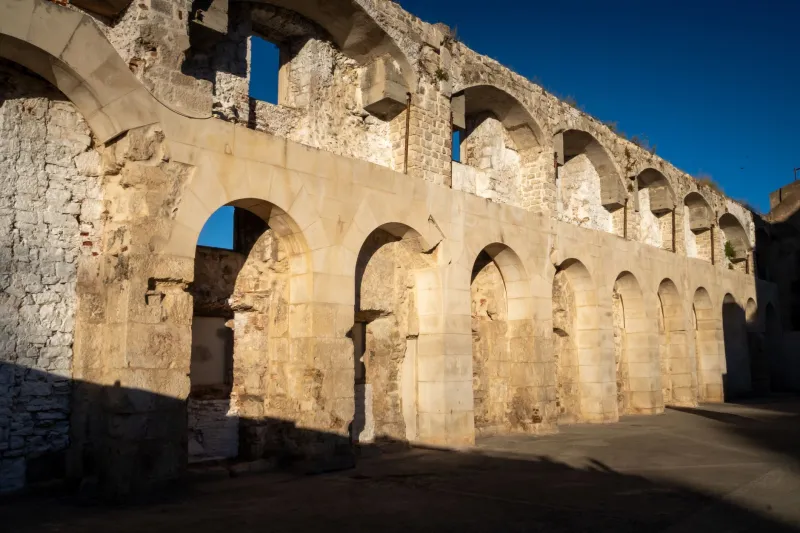
Photo by Photo by Alexis Presa on Unsplash on Unsplash
There is a particular kind of political figure who appears in every civilization, in every era, wearing different titles but serving the same essential function. He is the man everyone blames. He is also, almost always, not the man who made the decision.
The Romans had a word for the administrative arrangement that produced him: clientela. The Ottomans had an entire bureaucratic class. The British Empire refined the practice across four continents. And if you are an American who has watched a cabinet secretary resign over a policy he did not design, you have seen the modern version of something that is approximately five thousand years old.
This is not cynicism. It is architecture.
The Client King and the Invisible Hand
When Rome extended its reach beyond the Italian peninsula, it faced a problem that every expanding power eventually confronts: governing people who do not want to be governed by you is expensive, slow, and dangerous. The solution Rome perfected was not direct administration — it was the client kingdom.
A client king ruled in his own name, collected taxes from his own people, maintained his own court, and received the resentment of his own subjects when things went badly. Rome, meanwhile, set the terms, extracted the tribute, and remained conveniently absent from the moments of visible cruelty. Herod the Great is perhaps the most famous example. He built magnificent cities, cultivated Roman friendship, and was despised by a significant portion of his own population — while Augustus, who required all of it, remained at comfortable distance in the historical memory of the region.
 Photo: Herod the Great, via persianchristianway.com
The genius of the arrangement was not merely practical. It was psychological. Human beings direct their anger at what they can see. A tax collector standing in front of you is a more satisfying target than an emperor in Rome you will never meet. The client king did not merely absorb blame as a side effect of his position — absorbing blame was his position. The Romans understood this with the clarity that comes from running a civilization long enough to watch the same problems recur.
The Mechanism Across Millennia
What makes this pattern so persistent is that it does not require conspiracy. It requires only that powerful institutions understand something true about human psychology: proximity creates accountability, and accountability can be managed through structural distance.
The Ottoman Empire's system of pashas — provincial governors appointed from Istanbul — operated on the same principle. When a province suffered, the pasha suffered the population's fury. When a pasha became too powerful or too popular, Istanbul recalled or eliminated him. The empire maintained its authority by ensuring that no intermediate figure ever accumulated enough legitimacy to rival the center, while also ensuring that someone local was always available to receive the complaints.
The British Raj formalized this into an art form. The concept of the princely state — nominally sovereign Indian rulers who governed their populations under British paramountcy — allowed the Crown to maintain ultimate authority while presenting a local face to local grievances. When famines struck, when taxes rose, when ancient customs were disrupted by the grinding logic of empire, there was always a maharaja or a nawab whose name appeared on the relevant documents. The Viceroy's correspondence, by contrast, concerned itself with strategy.
None of this required the intermediaries to be corrupt, weak, or even unwilling. Many client kings were genuinely talented administrators. Many pashas governed with real competence. The trap was structural, not personal. The moment you accept the title, you accept the liability.
Cold War Proxies and the Perfection of the Form
The twentieth century did not invent the proxy relationship — it industrialized it. Both the United States and the Soviet Union spent the Cold War cultivating governments in other countries that would pursue superpower interests while absorbing the local consequences of those interests.
The pattern repeated with remarkable consistency. A government aligned with Washington or Moscow would implement policies — economic restructuring, military campaigns, political repression — that served the patron's strategic interests. When those policies produced poverty, instability, or outright atrocity, the patron expressed concern from a distance. The client government fell, was replaced, or was quietly abandoned. The patron remained.
American readers will recognize specific chapters of this history from their own country's foreign policy debates. The recognition is the point. What looks, in the contemporary moment, like a unique moral failing or an unprecedented political arrangement is in fact the same mechanism that Roman senators would have found entirely familiar. The names change. The structure does not.
Why the Intermediary Always Eventually Fails
The cruel irony of the useful intermediary's position is that his usefulness depends on his credibility, and his credibility is consumed by the very function he performs. Every time he absorbs blame, he becomes slightly less legitimate. Every time the real authority behind him is glimpsed — through a leaked document, a journalist's investigation, a moment of visible coordination — the fiction that he is genuinely in charge becomes harder to maintain.
History's intermediaries tend to end in one of three ways. They are abandoned when the blame they carry becomes too radioactive for the patron to remain associated with them. They are eliminated when they develop enough independent power to become a liability rather than an asset. Or they outlast their patron and discover, often too late, that they have no constituency of their own — because they spent their entire tenure representing someone else's interests.
The Roman client kings who survived longest were the ones who understood this dynamic clearly and managed it deliberately — cultivating just enough local legitimacy to remain useful, never enough to become threatening. It was an extraordinarily precise balance to maintain, and most of them failed to maintain it indefinitely.
What the Traveler Sees
For the historically attentive traveler, the physical remains of this arrangement are everywhere in the Old World. The palaces of client kings still stand in Jordan, in India, in the territories that were once the Ottoman periphery. They are magnificent structures, built with real resources and genuine ambition, and they are monuments to a particular kind of power — the power that is real enough to build something beautiful, but not quite sovereign enough to determine its own fate.
Standing in Herod's palace complex at Caesarea Maritima, or walking through the durbar halls of a Rajasthani fort, it is worth pausing to consider what the man who built it actually understood about his own position. He knew, almost certainly, that the arrangement had limits. He built anyway. The building was its own argument for legitimacy — a claim, made in stone, that he was more than an instrument of someone else's policy.
 Photo: Rajasthani fort, via media1.thrillophilia.com
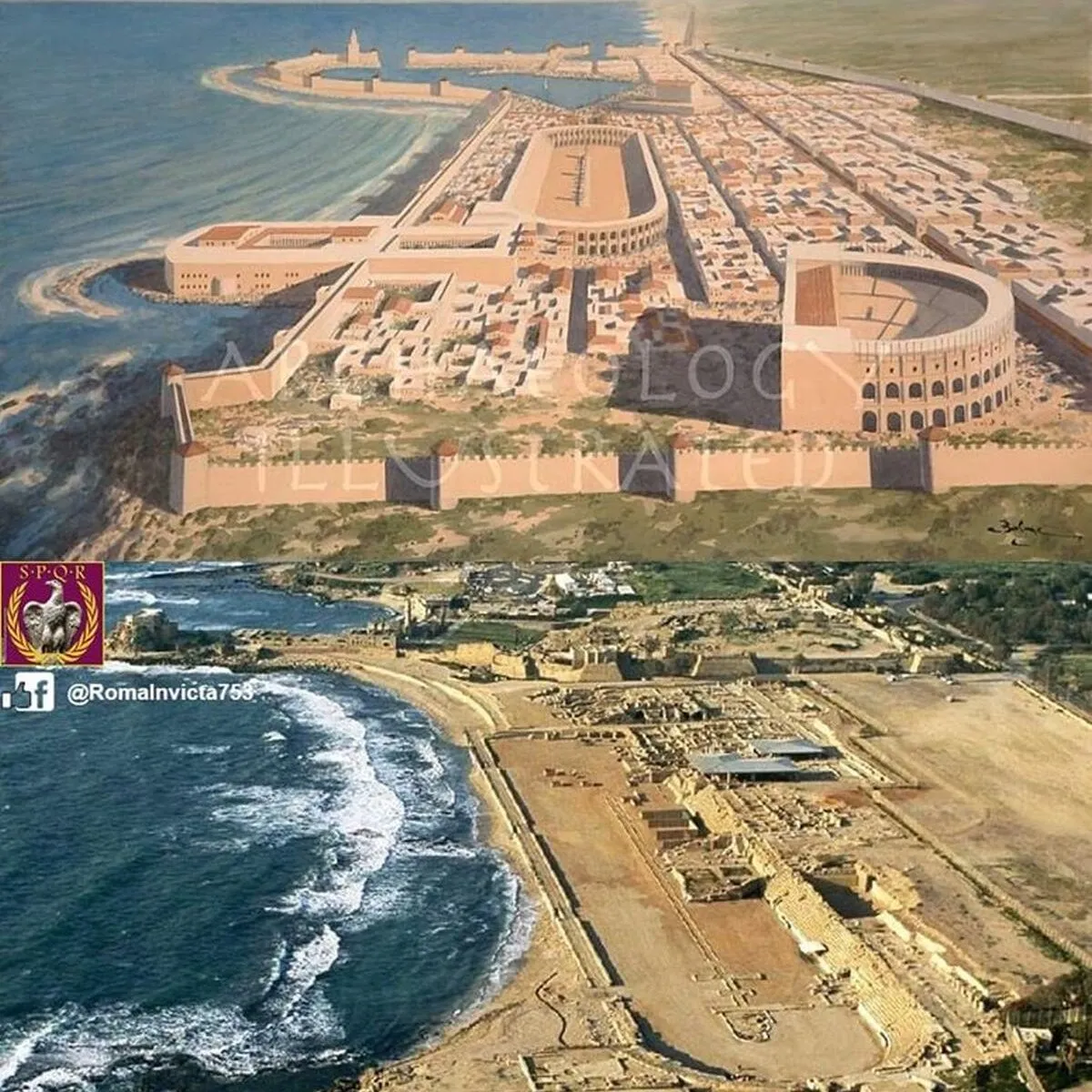 Photo: Caesarea Maritima, via imperiumromanum.pl
The claim was not entirely wrong. But it was not entirely right, either. That tension is what you are looking at when you look at those walls.
Human psychology has not changed enough, in five thousand years, to make the arrangement obsolete. We still need someone to blame. Power still prefers to operate at a distance from the moment of blame. And somewhere, in every functioning hierarchy you can name, there is a person whose primary qualification is his willingness to stand in that particular spot.