The Purge That Proves Nothing: Why Testing Loyalty Has Always Destroyed It

Photo by Photo by Winston Tjia on Unsplash on Unsplash
The ruler who fears betrayal has already begun to create it.
This is not a paradox. It is a mechanism, and it operates with the same consistency across cultures separated by thousands of miles and thousands of years. The moment an institution begins formally evaluating the fidelity of its members — demanding demonstrations, requiring oaths, staging tests — it sets in motion a selection process that reliably promotes the wrong people. History does not offer many exceptions to this pattern. It offers an extraordinary number of confirmations.
Understanding why requires looking carefully at what loyalty actually is, and what it becomes when it is required to perform itself under observation.
What Loyalty Is, Before It Is Tested
Genuine loyalty — the kind that functions under pressure, that survives the moment when betrayal would be easy and profitable — is not primarily a conscious commitment. It is a disposition that develops through shared experience, mutual obligation, and the accumulation of small choices made when no one was watching. The Roman concept of fides captured something of this: a fidelity rooted not in fear of punishment but in a felt sense of reciprocal obligation between parties who had established trust over time.
This kind of loyalty is, by its nature, difficult to demonstrate on demand. It is also difficult to fake over extended periods. A man who is genuinely loyal to an institution behaves the same way whether or not he believes he is being observed, because his behavior is not a performance — it is an expression of something he actually values.
The man who is performing loyalty, by contrast, is exquisitely sensitive to observation. He has learned, precisely because his commitment is not genuine, to read the signals that indicate what a loyal person is supposed to look like in a given moment. He is, in a sense, a better actor than the genuinely loyal subordinate, who has never needed to develop that skill.
When an institution begins formally testing loyalty, it creates conditions that favor the actor over the authentic. This is not an accident of implementation. It is a structural consequence of the testing itself.
The Assyrian Court and the Arithmetic of Suspicion
The Assyrian kings of the first millennium BCE governed one of history's most effectively brutal empires, and they were also among the first rulers to leave detailed records of their anxiety about the people around them. The royal correspondence from Nineveh reveals a court in which officials were regularly required to swear elaborate oaths of loyalty, to denounce colleagues who showed insufficient enthusiasm, and to demonstrate their fidelity through acts of compliance that escalated in proportion to the king's suspicion.
The result, visible in the records, was a court populated by men who had survived previous purges. Survival, in that environment, required a specific skill set: the ability to appear maximally loyal while remaining maximally flexible about where that loyalty was actually directed. The men who rose through Assyrian court politics were not the king's most devoted servants. They were the most accomplished readers of political weather.
The genuinely devoted — those who said what they believed, who raised concerns through proper channels, who trusted that honest counsel would be received as a form of service — appear in the historical record primarily as cautionary examples. They were the ones who misjudged the moment.
Stalin's Perfect Machine
No historical episode illustrates the self-defeating logic of loyalty testing more completely than the Soviet purges of the 1930s. The show trials that eliminated the old Bolshevik guard — men who had, in many cases, devoted their entire adult lives to the revolutionary cause — are often discussed as an expression of Stalin's personal paranoia. That framing, while not inaccurate, obscures the institutional logic that made the purges so devastatingly effective at achieving the opposite of their stated purpose.
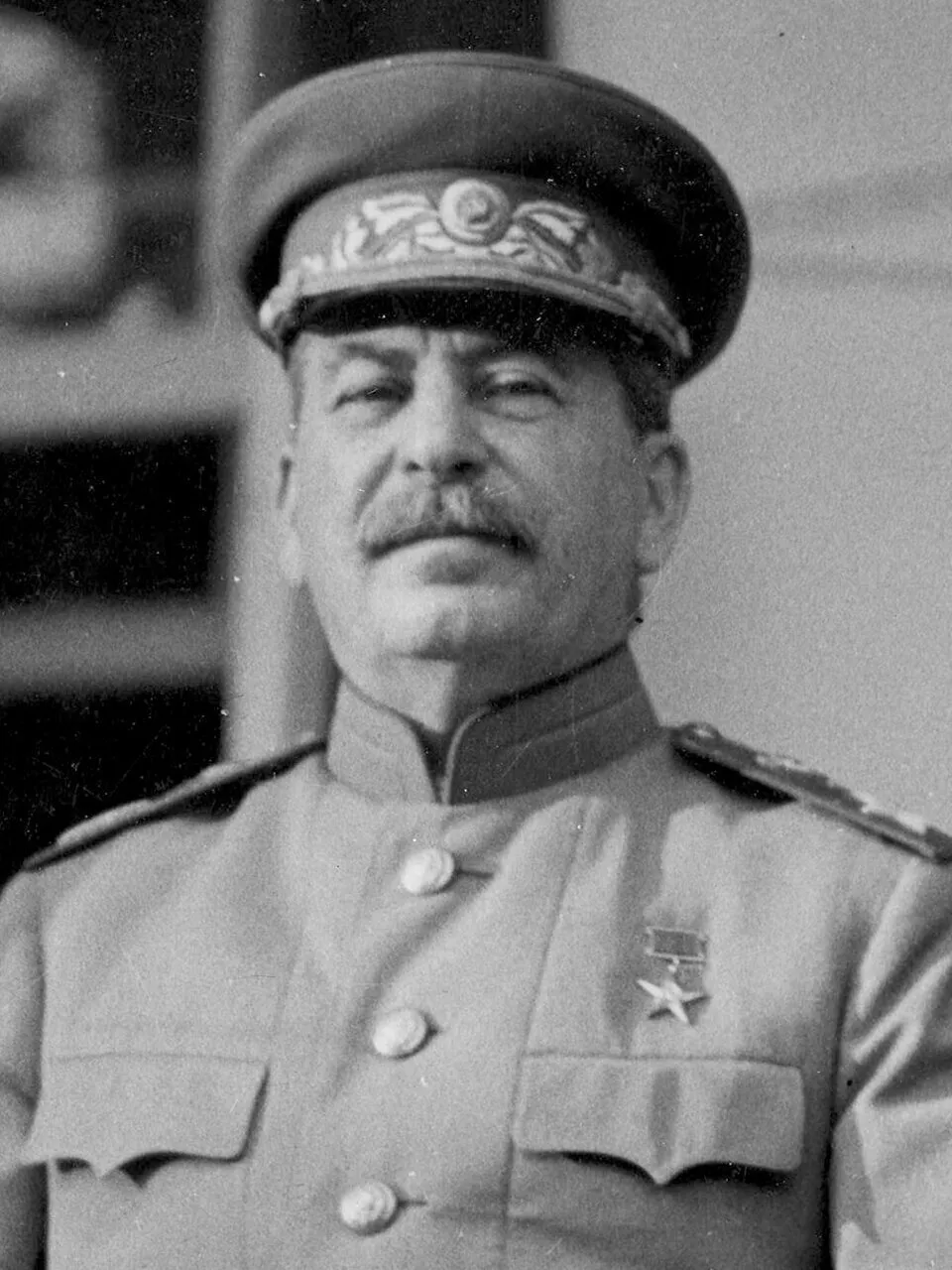 Photo: Stalin, via upload.wikimedia.org
The purges were designed to eliminate disloyalty. What they actually eliminated was independent judgment. The officials who survived were those who had learned, with extraordinary precision, to anticipate what Stalin wanted to hear and to provide it before being asked. They were not loyal to the Soviet state in any meaningful sense — they were loyal to their own survival, which required constant recalibration to the preferences of whoever held power at a given moment.
The institutional consequence was an apparatus staffed by people who had been selected, through repeated cycles of elimination, for their willingness to tell powerful men what those men wanted to hear. The information that reached the top of the Soviet system in the late 1930s and 1940s was therefore systematically distorted — not through any coordinated conspiracy, but through the accumulated effect of thousands of individual decisions by thousands of individual officials who had learned that accuracy was less valuable than palatability.
When Hitler invaded in 1941, Stalin received intelligence warnings from multiple sources for months in advance. The intelligence was accurate. It was also unwelcome. The officials who delivered it had watched enough colleagues disappear to understand what happened to people who delivered unwelcome information. The result was a catastrophic failure of institutional awareness at precisely the moment when institutional awareness was most critical.
 Photo: Hitler, via a57.foxnews.com
The purge that was supposed to protect the regime had produced an information environment in which the regime could not protect itself.
The Corporate Restructuring as Loyalty Test
American readers who have lived through a corporate reorganization — and a remarkable number have — will recognize the psychological dynamics of the loyalty purge in a familiar modern form. The language is different: performance review, culture fit, strategic realignment. The mechanism is the same.
When an organization under new leadership conducts a comprehensive evaluation of existing personnel, it creates an environment in which every employee must perform loyalty to the new direction, whatever that direction is. The employees who thrive in this environment are not necessarily the most competent or the most genuinely committed to the organization's mission. They are the ones most skilled at reading what the new leadership wants to see and providing it.
The employees most likely to be eliminated in this process are often those whose value to the organization was precisely their willingness to maintain standards, raise concerns, and push back on decisions they believed were mistaken — behaviors that, in the context of a loyalty evaluation, are nearly indistinguishable from resistance.
Organizations that conduct repeated cycles of this kind of restructuring reliably produce the same outcome that Assyrian courts and Soviet bureaucracies produced: a staff selected for compliance rather than competence, and an information environment in which leadership receives confirmation rather than counsel.
The Test That Cannot Be Passed
The deepest problem with institutional loyalty testing is not that it selects for the wrong people, though it does. It is that the act of testing changes the thing being tested.
A subordinate who knows he is being evaluated for loyalty is no longer simply loyal or disloyal — he is now managing a performance. Even the genuinely faithful become self-conscious, begin calculating, begin wondering whether their natural behavior will be correctly interpreted. The introduction of the test creates the very artificiality it claims to be detecting.
This is why history's most effective leaders — the ones who actually built durable institutions — tended to cultivate loyalty through relationship rather than through evaluation. They created conditions in which genuine commitment could develop organically, and they trusted the judgment that comes from extended shared experience rather than the verdict of a formal test.
The rulers who tested most aggressively tended to die surrounded by people who had passed the test. That is not quite the same thing as being surrounded by people who were actually loyal. The difference, when it mattered, was usually decisive.
Five thousand years of institutional history suggests that the inability to make this distinction is not a correctable error in human governance. It appears to be a persistent feature of how power responds to its own anxiety. Recognizing the pattern does not make any individual institution immune to it. But it does make the pattern legible — and legibility is where the possibility of resistance begins.