The Understudies Who Outlasted the Stars: Why History's Most Enduring Powers Rose From Accidental Capitals
The Geography of Unintended Consequences
When Constantine the Great decided to build a new capital in 330 CE, he wasn't trying to replace Rome — he was trying to save it. Constantinople was conceived as Rome's eastern partner, a strategic outpost that would help manage the empire's unwieldy geography. Within three centuries, the "New Rome" had become the only Rome that mattered, while the original city declined into a provincial backwater.
This wasn't an accident of history but an illustration of its most reliable pattern: the place that ends up mattering is rarely the place that was supposed to matter. The cities that dominate civilizations are usually chosen for reasons of compromise, convenience, or strategic necessity rather than destiny or design. Understanding why reveals something fundamental about how power actually consolidates over time.
The center of gravity is almost never where the official maps claim it is.
The Logic of the Compromise Capital
Washington, D.C. provides the template for this phenomenon. In 1790, nobody thought the federal district would become one of the world's most important cities. It was a swampy compromise between northern and southern interests, located on the Potomac because Alexander Hamilton needed southern votes for his financial program and Thomas Jefferson needed the capital closer to Virginia.
 Photo: Washington, D.C., via live.staticflickr.com
The site had no natural advantages — no major port, no existing commercial infrastructure, no established population. Philadelphia, New York, and Boston all had stronger claims to serve as the permanent seat of American government. But those cities' very advantages made them politically impossible. Each had powerful local interests that would have shaped federal policy in their favor.
The genius of the Washington compromise was precisely its apparent insignificance. A purpose-built capital on undeveloped land couldn't favor existing commercial networks or regional power brokers. It was neutral because it was nothing — and that nothingness became its strength.
The Japanese Precedent
Kyoto's rise follows an identical pattern. When Emperor Kanmu established Heian-kyō in 794 CE, he wasn't trying to create Japan's eternal capital — he was trying to escape the political constraints of Nara. The Buddhist monasteries in the old capital had accumulated too much influence over imperial policy, and moving the court was easier than confronting them directly.
The new site was chosen for negative rather than positive qualities: it wasn't dominated by existing power structures, it wasn't associated with particular clan interests, and it wasn't burdened with established precedents. These apparent weaknesses became decisive advantages as the imperial system evolved.
Kyoto remained Japan's imperial capital for over a thousand years, outlasting dozens of military governments and surviving the complete transformation of Japanese society. Meanwhile, Nara — the grand capital it was meant to supplement — became a pleasant tourist destination known mainly for its deer park.
The Byzantine Lesson
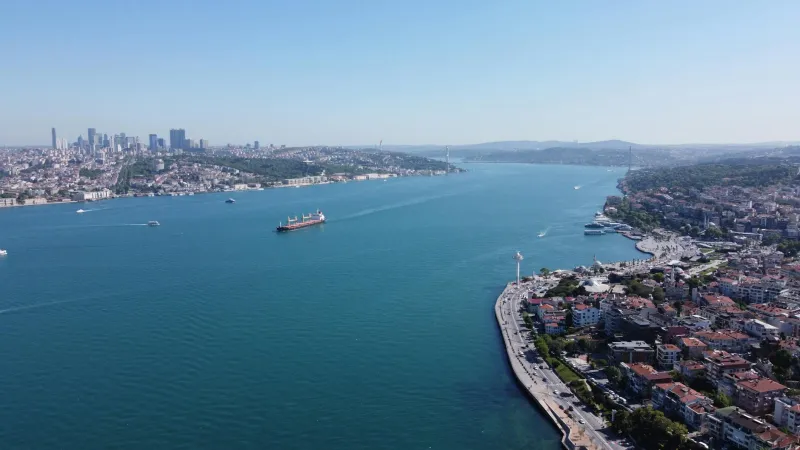
Constantinople's longevity illustrates why accidental capitals often prove more durable than their prestigious predecessors. When Constantine chose the site, he was solving immediate strategic problems rather than building for eternity. The city controlled the Bosphorus strait, linked European and Asian territories, and sat far enough from Rome to avoid interference from the Senate and traditional aristocracy.
These practical advantages proved more valuable than Rome's symbolic authority or historical prestige. Constantinople could adapt to changing circumstances because it wasn't weighed down by ancient traditions or entrenched interests. When the western empire collapsed, the eastern capital survived because it had been designed for function rather than glory.
The city lasted for over a millennium after Rome's fall, eventually becoming the center of the Ottoman Empire as well as the Byzantine. Its location remained strategically crucial even as the political systems it housed changed completely. Geography outlasted ideology.
The American Pattern Repeated
This pattern appears throughout American development. Detroit became the center of automobile manufacturing not because it was planned as an industrial hub, but because it happened to have the right combination of Great Lakes shipping access, iron ore proximity, and available labor when the industry was taking shape.
Silicon Valley emerged in Santa Clara County not because anyone designed it as a technology center, but because Stanford University had land to lease, defense contractors needed engineering talent during World War II, and California's business climate attracted entrepreneurs who couldn't get funding elsewhere.
Las Vegas became America's gambling capital because Nevada needed tax revenue and had fewer moral objections to vice than more established states. The city's apparent disadvantages — desert location, lack of natural resources, distance from population centers — became advantages once the legal framework changed.
The Psychology of Peripheral Success
Why do secondary cities so often outlast primary ones? The answer lies in the psychological and institutional dynamics that govern established power centers. Prestigious capitals accumulate not just wealth and influence but also constraints — traditional ways of doing things, entrenched interest groups, and cultural expectations that resist adaptation.
Rome couldn't abandon its Senate even when the Senate had become a hindrance to effective governance. Paris couldn't escape the social hierarchies that made revolutionary change inevitable. Established capitals become prisoners of their own success, unable to adapt to changing circumstances because adaptation would threaten the very interests that made them powerful.
Secondary cities start with fewer advantages but also fewer constraints. They can experiment with new approaches, attract different types of people, and respond to opportunities that established centers can't or won't pursue. Their initial weakness becomes long-term strength.
The Modern Application
This pattern continues in contemporary geopolitics. Dubai has become a more important commercial hub than many older, more established Middle Eastern cities. Singapore's strategic location and political pragmatism made it more influential than larger regional capitals. Shenzhen grew from a fishing village to a major industrial center in four decades by embracing economic policies that Beijing couldn't implement directly.
The same dynamic operates within countries. Austin has attracted more technology investment than older Texas cities. Nashville has become a more important media center than traditional entertainment capitals. These cities succeeded partly because they weren't burdened by established ways of doing things.
The Lesson for Power
Understanding this pattern reveals something crucial about how power actually works. Influence doesn't necessarily flow to where it's supposed to go according to official hierarchies or traditional expectations. Instead, it accumulates where it can operate most effectively, which is often somewhere that seemed marginal when the process began.
The cities that end up mattering are usually the ones that solve practical problems rather than embodying symbolic authority. They rise because they're useful, not because they're important — and usefulness proves more durable than importance.
For anyone trying to understand where power is actually located in contemporary systems, the lesson is clear: look not at the prestigious centers that command attention, but at the secondary locations that command resources. The real capital is usually somewhere nobody expected it to be.