The Machinery Remembers: How Administrators Buried Empires and Kept Working

There is a particular kind of political theater that every civilization has performed with remarkable consistency. A dynasty collapses. A revolution succeeds. A republic replaces a monarchy, or a technocracy replaces a republic. The flags change. The portraits in the public buildings change. The speeches change. And then, quietly, the same men who processed the tax receipts under the old regime take their seats at the same desks and begin processing tax receipts under the new one.
History is not primarily a story about rulers. It is a story about the systems rulers depend upon — and those systems have always been considerably harder to kill than the rulers themselves.
The Egyptian Precedent
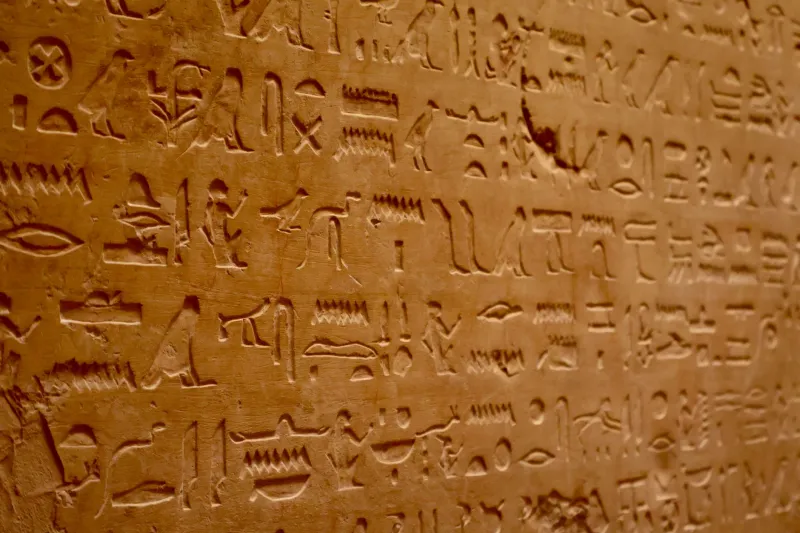
The administrative apparatus of ancient Egypt is perhaps the oldest surviving proof of this principle. Over three thousand years, Egypt absorbed conquest after conquest — Hyksos, Assyrians, Persians, Greeks, Romans — and in nearly every case, the incoming power made an early and pragmatic discovery: the people who knew how to manage the Nile's flood cycles, calculate grain yields, and maintain the irrigation infrastructure were not interchangeable. You could replace a pharaoh in an afternoon. Replacing a competent provincial administrator with institutional knowledge accumulated over decades was a project that could take generations, and the cost of attempting it was measured in famine.
The Ptolemaic dynasty, founded by one of Alexander the Great's generals, understood this with particular clarity. Greek rulers sat atop an Egyptian bureaucratic structure they never fully penetrated or understood, and the scribal class that had served the previous regime continued serving the new one with minimal interruption. The names at the top of the hierarchy changed. The processes beneath them did not.
This is not merely a story about clever survivors protecting their own interests. It reflects something deeper about the nature of institutional knowledge: it accumulates slowly, it transfers poorly, and destroying it carries a cost that most conquerors are unwilling to pay.
Rome's Administrative Inheritance
The Roman Empire's eventual transformation into the Byzantine Empire offers one of history's most instructive examples of bureaucratic durability. When the western half of the Roman Empire collapsed in the fifth century, the eastern half — headquartered in Constantinople — continued functioning for nearly another thousand years. Historians debate the reasons endlessly, but one factor is consistently underweighted in popular accounts: the eastern empire had developed a professional administrative class with codified procedures, written precedents, and institutional memory that operated largely independently of whoever sat on the throne.
Byzantine emperors came and went with considerable violence. Between 395 and 1453 CE, the empire produced more than eighty emperors, a significant portion of whom were deposed, blinded, exiled, or murdered. The administrative apparatus processed their reigns like a river processes weather — absorbing each storm, recording it, and continuing to flow. The logothetes, the various secretarial offices, the provincial tax collectors: these institutions exhibited a continuity that no individual emperor approached.
When Mehmed II finally took Constantinople in 1453, his first administrative challenge was not military but bureaucratic. He needed the Ottoman Empire's own administrative machinery to absorb and manage a vast new territory, and he drew heavily on existing Byzantine precedents to do it. The empire changed hands. The paperwork, in a meaningful sense, did not.
The French Revolution's Uncomfortable Morning After
Revolutions are perhaps the most instructive stress tests of administrative durability, because they represent the most determined effort to destroy not just the people at the top of a system but the system itself. The French Revolution of 1789 was, among other things, an explicit attempt to rebuild French society from its foundations — new calendar, new measurements, new titles, new everything.
By the time Napoleon Bonaparte consolidated power a decade later, the revolution had largely failed in its administrative ambitions. The old fiscal apparatus had been dismantled, but tax collection still had to happen. Local governance still had to function. Courts still had to operate. Napoleon's great administrative achievement — the prefectural system, the Napoleonic Code, the reorganization of French central administration — drew extensively on the institutional memory and personnel of the ancien régime. Many of the men who built Napoleon's state had served Louis XVI. They had survived the revolution by being too useful to kill.
Napoleon himself recognized this with characteristic bluntness. He was not interested in ideological purity. He was interested in what worked. And what worked, almost invariably, involved the people who had been doing the work before he arrived.
Why Americans Misread This
The United States has a particular cultural blindness to administrative continuity, and it is worth examining why. American political culture is organized almost entirely around personalities: presidents, senators, cabinet secretaries, candidates. The four-year election cycle structures public attention around individual figures rather than institutional processes. Presidential transitions are covered as transformative events — and in terms of rhetoric and policy emphasis, they often are.
But the federal bureaucracy that processes those policy decisions employs roughly two million civilian workers. The institutional knowledge embedded in the Department of Agriculture, the Internal Revenue Service, the Army Corps of Engineers, the Social Security Administration — this knowledge was not created by any president and will not be destroyed by any president. It accumulates through decades of practice, precedent, and procedure. It outlasts administrations the way rivers outlast mayors.
This is not a partisan observation. Administrations of every ideological stripe have discovered, with varying degrees of frustration, that the machinery of government has its own momentum. Campaign promises encounter the friction of existing systems. Ambitious reforms encounter the institutional memory of previous attempts. The filing cabinet, as it were, remembers what the new arrival does not.
The Psychological Dimension
Human psychology helps explain why we consistently misread this dynamic. We are evolved to track individuals — to read faces, assess intentions, follow narratives about specific people. We are considerably less equipped to track systems, processes, and institutional structures. A charismatic leader captures attention in a way that a competent deputy secretary never will, even if the deputy secretary's decisions affect more people more directly.
The ancient world understood this, which is why so much political theater was organized around the person of the ruler — the god-king, the divine emperor, the anointed monarch. Focusing attention on the individual at the top served the interests of the system beneath, which could operate with relative autonomy as long as the public was watching the performance at the apex.
Modern democracies have inherited this theatrical structure without necessarily inheriting the self-awareness that accompanied it in more cynical ages. We watch the press conference. The machinery files its forms.
What Endures
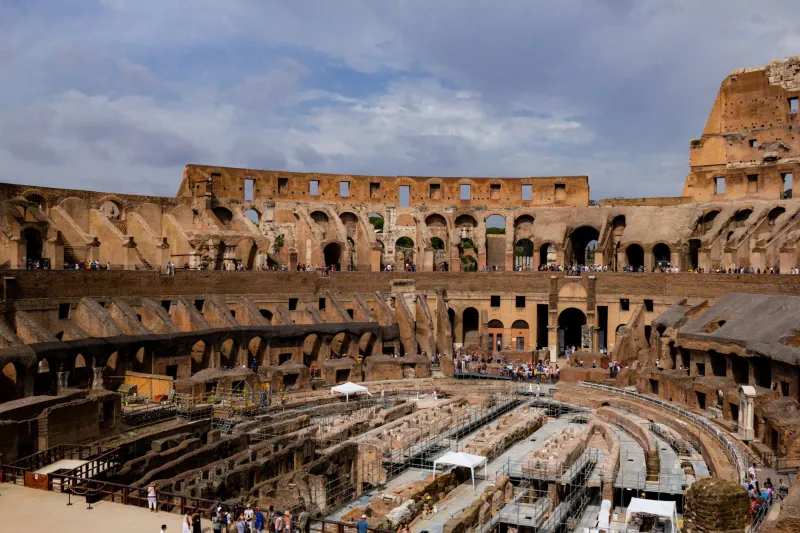
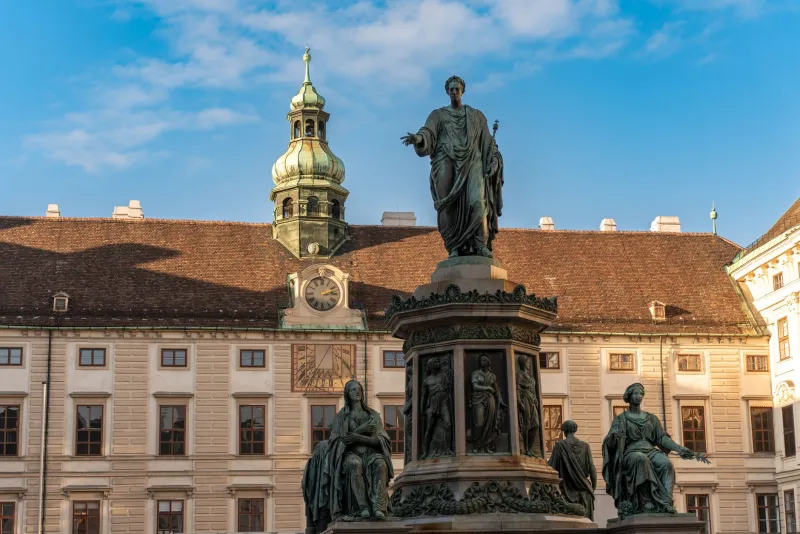
The traveler moving through the old capitals of the world — Cairo, Rome, Istanbul, Paris — encounters, beneath the tourist surface, the physical residue of administrative continuity. The same buildings that housed Byzantine bureaucrats housed Ottoman ones. The same streets that Roman tax collectors walked became the routes of medieval papal administrators. Institutional geography persists because institutional function persists.
This is not cause for despair. Administrative continuity is, in many respects, what makes civilization possible. The alternative — rebuilding governmental capacity from scratch with every change of leadership — is a project that history has tested repeatedly and found ruinous. The bureaucrat's immortality is, in this sense, civilization's immune system.
But it is worth understanding clearly. The people who wield power are, in the long run, more ephemeral than the processes that channel it. History's most durable lesson about governance may be the simplest one: the machinery outlasts the machinist. It always has.