Panem et Circenses Was Never the Whole Story: What the Crowd Actually Knew
Juvenal wrote his famous complaint about bread and circuses sometime around the late first or early second century CE, and for nearly two thousand years, his observation has been treated as a timeless insight into the gullibility of ordinary people. The Roman public, he argued, had surrendered its political agency for free grain and chariot races. The implicit lesson, repeated endlessly by critics of popular culture from medieval clerics to contemporary media scholars, is that populations are passive consumers of distraction, easily managed by any authority willing to provide sufficient entertainment.
The historical record does not entirely support this reading. In fact, it complicates it considerably.
What Juvenal Was Actually Saying
It is worth pausing on what Juvenal was actually complaining about before accepting his framework wholesale. He was not a neutral observer. He was an aristocratic satirist writing in a tradition of elite contempt for popular taste — a tradition that predated him by centuries and has continued uninterrupted to the present day. His complaint was not primarily that the Roman public was being deceived. It was that the Roman public had made a choice he found degrading: trading political engagement for material comfort.
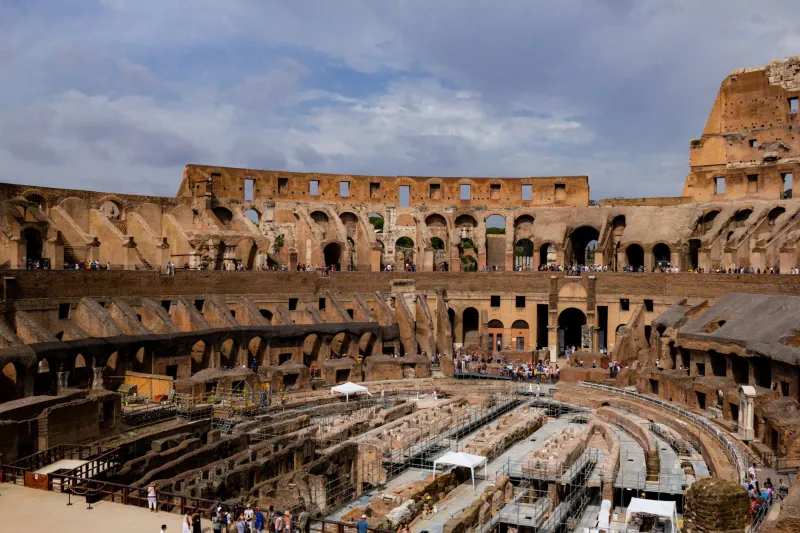
This is a meaningfully different claim. Deception implies passivity. Choice implies agency. And the Roman crowd, whatever its limitations, was not a passive entity. The Circus Maximus and the Colosseum were not merely sites of consumption. They were sites of communication — venues where the relationship between ruler and ruled was publicly negotiated in real time.
When a Roman emperor appeared in the imperial box, the crowd's response constituted political information. Cheers or silence, enthusiasm or sullenness — these signals were read carefully by the emperor's advisors and, when they pointed toward trouble, taken seriously. Emperors who were booed at the games understood that something had gone wrong in the relationship between palace and populace. The spectacle was not a one-way broadcast. It was a feedback mechanism.
The Crowd as Negotiating Partner
Ancient sources document with some regularity the moments when the Roman crowd used the games to make political demands. The assembled public at the Circus Maximus or the theater could, and did, call for the release of prisoners, the punishment of unpopular officials, and the redress of specific grievances — and these demands were not always ignored. Emperors who wished to maintain the fiction of popular legitimacy had reasons to respond.
This dynamic was not unique to Rome. The Byzantine hippodrome, where chariot racing continued as a major civic institution for centuries after the western empire's collapse, was the site of some of the most significant political upheavals in Byzantine history. The Nika riots of 532 CE — which nearly ended Justinian's reign and may have killed thirty thousand people — began as a dispute between chariot-racing factions and escalated into a political crisis that required the empress Theodora's famous refusal to flee to hold the government together. The circus was the place where Constantinople's population assembled, and an assembled population is never entirely manageable, regardless of the entertainment provided.
The lesson that administrators drew from episodes like the Nika riots was not that spectacle was a reliable tool of control. It was that spectacle was a dangerous tool that required constant calibration. Getting the balance wrong — too much deprivation, too much excitement, too many grievances allowed to accumulate — could transform an entertainment venue into a revolutionary assembly with terrifying speed.
Medieval Variations on the Theme
The medieval European world inherited the Roman tradition of public spectacle but reconfigured it through the institutions of the Church and the monarchy. Religious festivals, royal entries, public executions, and tournament spectacles all served functions analogous to the Roman games — providing collective experience, demonstrating authority, and creating occasions for the public display of loyalty.
But medieval crowds were no more passive than Roman ones. Public executions — intended as demonstrations of sovereign power and deterrents to disorder — frequently became occasions for popular sympathy with the condemned, public mockery of the authorities, or outright riot. The authorities managing these spectacles understood that the crowd's response was unpredictable and that a botched execution could undermine the very authority it was meant to display.
French royal entries into cities, elaborate ceremonial processions designed to demonstrate the monarch's magnificence and the city's loyalty, were occasions when urban populations could present grievances, extract concessions, and publicly evaluate the ruler's performance in ways that would not have been possible in other settings. The spectacle created a temporary space for negotiation that both parties understood and used.
The Modern Spectacle Economy
Contemporary American culture is saturated with arguments about distraction and manipulation — concerns about social media, about the entertainment industry, about the way political coverage has adopted the grammar of sports broadcasting. The implicit frame is almost always Juvenal's: the public is being managed, and it is too distracted to notice.
The historical record suggests a more complicated picture. American audiences have always been more sophisticated consumers of political spectacle than their critics have assumed. The same public that watches reality television also periodically produces political upheavals that confound every expert prediction. The same population that consumes enormous quantities of sports coverage also turns out, in unpredictable moments, to make demands on its institutions that no amount of entertainment can suppress.
This is not because the public is heroic or because distraction is harmless. It is because the relationship between spectacle and political consciousness has never been as simple as the critics of bread and circuses have argued. People can simultaneously enjoy the circus and understand that they are being managed. These are not mutually exclusive states.
When the Formula Fails
The most instructive moments in the history of public distraction are not the moments when it works but the moments when it fails catastrophically. Rome's grain dole and games did not prevent the social convulsions of the late Republic or the political violence of the imperial succession crises. Byzantine chariot racing did not prevent the Nika riots. Medieval pageantry did not prevent peasant rebellions. The bread-and-circuses formula has a consistent failure mode: it works until it doesn't, and when it stops working, it stops working suddenly.
The pattern across these failures is remarkably consistent. Spectacle manages discontent effectively when material conditions are tolerable and grievances are manageable. It fails when the gap between the spectacle's implicit promises — that the system is functional, that authority is legitimate, that ordinary life is viable — and lived experience becomes too large to ignore. At that point, the crowd that was supposed to be passively entertained becomes, with very little warning, something else entirely.
This is the part of Juvenal's analysis that his modern admirers tend to omit. He was writing about a specific historical moment in which the formula was working — in which the Roman public had, for reasons he found contemptible, accepted the terms on offer. He was not writing about a permanent condition of human nature. The crowd that accepted bread and circuses under stable conditions was the same crowd that produced the catastrophic upheavals of the late empire when conditions changed.
The Actual Lesson
The history of public spectacle does not teach that populations are passive. It teaches that populations are patient — up to a point that is difficult to identify in advance and impossible to ignore once it has been crossed. The administrators who have managed public entertainment most successfully throughout history were not the ones who believed their own propaganda about the crowd's docility. They were the ones who understood that the spectacle was a negotiation, that the crowd had leverage, and that the goal was to keep the terms of the exchange acceptable to both parties.
Juvenal gave us a memorable phrase. He did not give us the whole story. The crowd, it turns out, was listening more carefully than he thought.